Consultation
Dr. Leo Chen reviews symptoms, performs a focused exam, and orders on-site digital X-rays.


Arthroplasty for Lasting Relief

From night pain to daily independence
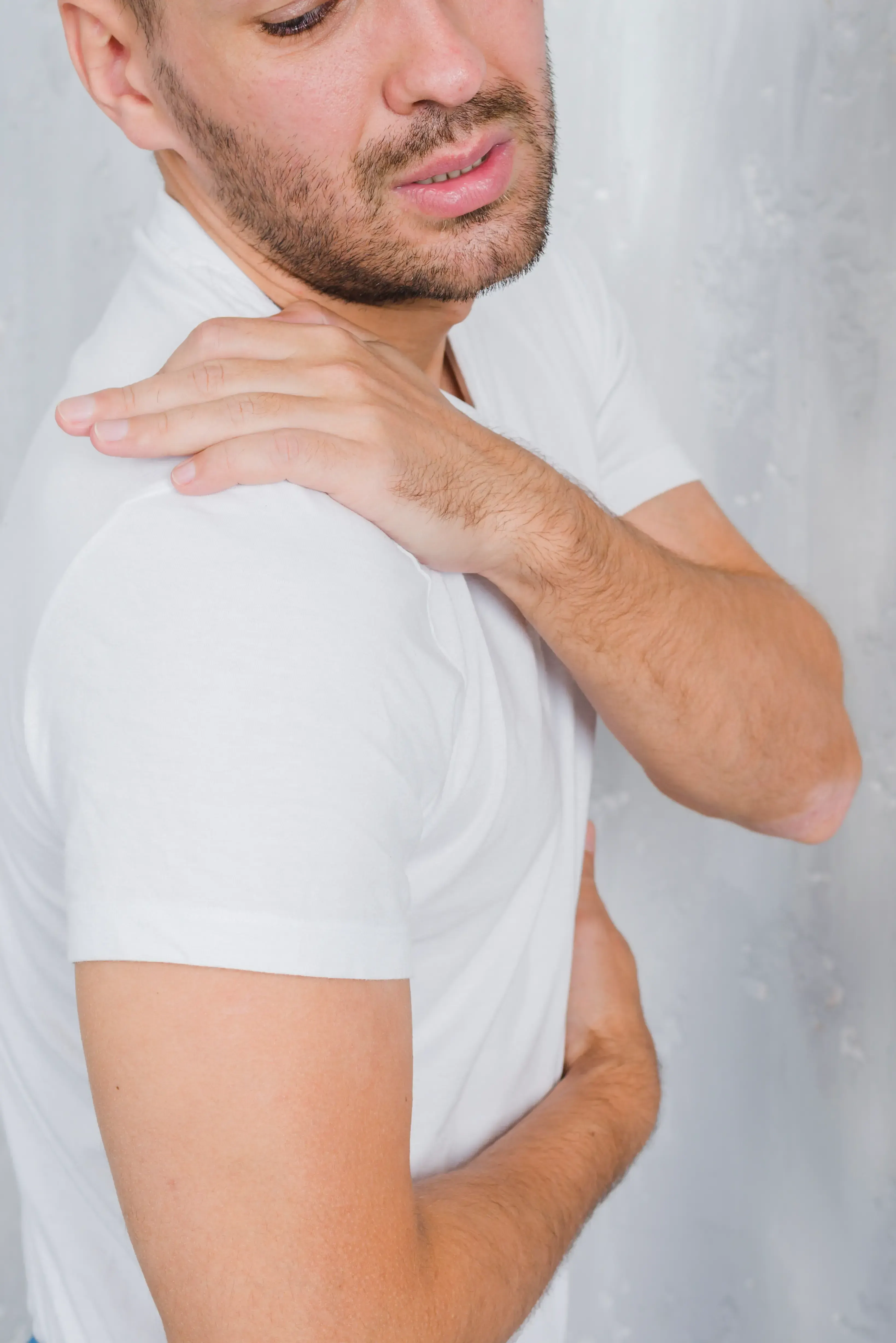
Severe shoulder arthritis and rotator cuff arthropathy can rob you of sleep, of reaching overhead, of even lifting a coffee cup without a sharp catch. Many patients describe years of bone-on-bone grinding, weakness that prevents combing their hair, and pain that injections, physical therapy, and anti-inflammatories no longer touch. Driving becomes difficult, work tasks feel impossible, and golf, tennis, fishing or simply lifting grandchildren slip out of reach. When non-operative shoulder pain care has been exhausted, surgery becomes a real consideration.
Total shoulder replacement (arthroplasty) resurfaces the worn ball-and-socket joint with smooth metal and polyethylene components, restoring glide and eliminating bone-on-bone pain. For patients with an intact rotator cuff, an anatomic implant rebuilds normal shoulder mechanics. For those with massive irreparable cuff tears or cuff arthropathy, a reverse shoulder replacement re-engineers the joint so the deltoid muscle powers motion. Dr. Leo Chen at Emerald Coast Ortho selects the right implant for your anatomy, with the goal of restoring sleep, function, and confidence.
Anatomic and Reverse Arthroplasty
Total shoulder replacement, also called shoulder arthroplasty, is an FDA-cleared procedure that replaces the damaged surfaces of the glenohumeral joint (the ball-and-socket where the upper arm meets the shoulder blade) with prosthetic components. The goal is to relieve pain, restore motion, and rebuild strength when arthritis, fracture, or rotator cuff arthropathy has destroyed the joint.
There are two main types. Anatomic total shoulder replacement mirrors normal anatomy: a metal ball replaces the humeral head and a smooth polyethylene cup resurfaces the glenoid socket. It is the first choice when the rotator cuff is intact and the bone stock is healthy. Reverse total shoulder replacement swaps the ball and socket, placing the ball on the shoulder blade and the cup on the humerus. This design lets the deltoid muscle drive shoulder elevation, making it ideal for patients with massive irreparable rotator cuff tears, cuff tear arthropathy, complex proximal humerus fractures, or failed prior surgery.
Dr. Leo Chen evaluates your shoulder with a focused exam, on-site digital X-ray, and advanced imaging when needed, then matches you to the implant design that fits your anatomy and goals. The surgery is typically performed under general anesthesia combined with a regional nerve block for excellent post-operative pain control, and most patients spend one to two nights in the hospital.
Pain relief and function
2000+ Satisfied patients






Most patients report dramatic reduction in shoulder pain at rest and with use.
Improved overhead reach, dressing, grooming, and daily tasks.
Anatomic implants restore strength when the rotator cuff is healthy.
Reverse design powers the shoulder when the rotator cuff cannot.
Modern implants commonly last 15 to 20 years or longer.
Elimination of night pain is one of the most reported benefits.
Compare options
| Treatment | Mechanism | Time | Results | Duration | Downtime | Best For |
|---|---|---|---|---|---|---|
| Total Shoulder Replacement | Prosthetic resurfacing of the joint | 2 to 3 hours | Major pain relief and restored motion | 15 to 20+ years | 6 to 12 weeks therapy | Advanced arthritis or cuff arthropathy |
| Rotator Cuff Repair | Surgical reattachment of torn tendons | 1 to 2 hours | Strength and motion recovery | Long-term if healed | 4 to 6 months | Repairable rotator cuff tears |
| PRP Injections | Concentrated growth factors stimulate healing | 30 to 45 minutes | Gradual pain and function gains | 6 to 12 months | 1 to 3 days | Early arthritis, partial cuff tears, tendinopathy |
| Corticosteroid Injections | Anti-inflammatory medication into the joint | 10 to 15 minutes | Rapid short-term pain relief | 6 to 12 weeks | None | Acute flare-ups and diagnostic clarity |
When surgery makes sense
Total shoulder replacement is typically considered after non-operative care has been thoroughly tried. Dr. Leo Chen reviews your imaging, exam findings, medical history, and goals before recommending arthroplasty.
If a contraindication applies, Dr. Leo Chen will discuss alternatives such as rotator cuff repair, PRP, corticosteroid injections, or further conservative management. Final candidacy is always determined at an in-person consultation.
Dr. Leo Chen reviews symptoms, performs a focused exam, and orders on-site digital X-rays.
Advanced imaging (CT when needed) lets Dr. Leo Chen template the implant size and type.
Bromley, CST/CSFA reviews surgical instructions, medications, and home recovery setup.
Dr. Leo Chen performs anatomic or reverse arthroplasty under general anesthesia with regional block.
Sling for 4 to 6 weeks, then progressive physical therapy guided by Dr. Leo Chen's protocol.
What you should know
Like any major joint replacement, total shoulder arthroplasty carries surgical risks. The most common short-term side effects include post-operative soreness, swelling, bruising around the shoulder and upper arm, temporary stiffness, and fatigue from anesthesia. A regional nerve block usually controls pain very effectively for the first 24 to 48 hours.
Less common complications include shoulder stiffness that requires additional therapy, persistent pain, wound healing problems, and temporary numbness around the incision.
Rare long-term risks include implant loosening, polyethylene wear, periprosthetic fracture, instability or dislocation of the prosthetic joint.
Dr. Leo Chen reviews your individual risk profile during consultation and uses meticulous surgical technique plus modern infection-prevention protocols to minimize complications.
Call Emerald Coast Ortho at (850) 864-3339 right away, or go to the nearest emergency department, if you develop a fever, spreading redness, warmth or drainage at the incision, calf pain or swelling, chest pain, or shortness of breath after surgery.
Total shoulder replacement is almost always billed through medical insurance, including commercial plans, Medicare, Medicare Advantage, and Tricare. As a medically necessary procedure for symptomatic arthritis or rotator cuff arthropathy, it is typically covered when conservative care has been documented and imaging supports the diagnosis.
Your total out-of-pocket cost depends on several variables: your specific insurance plan, deductible and out-of-pocket maximum status, the surgical facility (hospital vs. ambulatory surgery center), implant type and brand, length of hospital stay, anesthesia services, and the number of physical therapy visits required during recovery.
Emerald Coast Ortho dispenses slings and other DME in-office, which often reduces post-operative supply costs. For specific pricing, call (850) 864-3339 to speak with our team.
Fort Walton Beach, FL
Diplomate of the American Board of Orthopaedic Surgery.
Implant choice tailored to your rotator cuff and bone quality.
Same-day digital X-ray plus in-office slings, braces and supplies.
Dr. Leo Chen sees you at every visit, before and after surgery.
Shoulder replacement is only recommended after injections, physical therapy, and other conservative options have been genuinely explored - not as a first resort.
Total shoulder replacement is covered under Medicare, Tricare, and most major commercial plans. Our team verifies your benefits and manages prior authorization before your surgery is scheduled.
Common shoulder replacement questions
Anatomic total shoulder replacement mirrors normal anatomy and requires an intact rotator cuff. Reverse shoulder replacement swaps the ball and socket so the deltoid powers motion, used when the rotator cuff is irreparably torn.
Most patients wear a sling for 4 to 6 weeks, begin gentle physical therapy in week 2, return to light activity by 6 weeks, and reach near-full function between 4 and 6 months. Strength continues to improve up to a year.
Candidates typically have advanced shoulder arthritis or rotator cuff arthropathy with persistent pain despite injections, therapy, and medications. Dr. Leo Chen confirms candidacy with a focused exam and imaging at consultation.
Modern shoulder implants commonly last 15 to 20 years or longer. Longevity depends on implant type, activity level, bone quality, and adherence to post-operative restrictions.
Yes. Most patients wear a sling for 4 to 6 weeks to protect the repair and allow soft tissue healing. Dr. Leo Chen provides specific instructions at your pre-operative visit.
Driving typically resumes around 4 to 6 weeks once you are out of the sling, off narcotic pain medication, and have regained safe shoulder control. Always confirm with Dr. Leo Chen at your follow-up visit.