Consultation
Dr. Leo Chen reviews your history, examines the knee and discusses imaging from on-site X-ray and prior MRI.

Minimally invasive knee surgery
Diagnosis meets treatment
Persistent knee pain, catching, locking, swelling or instability can stop you from running on the beach, climbing stairs or sleeping comfortably. MRI and X-ray imaging are helpful, but they cannot always pinpoint the source of mechanical symptoms inside the joint. Patients across Okaloosa County often try rest, bracing and physical therapy with limited improvement, leaving them frustrated about returning to work, sport and daily routines without a clear diagnosis or path forward.
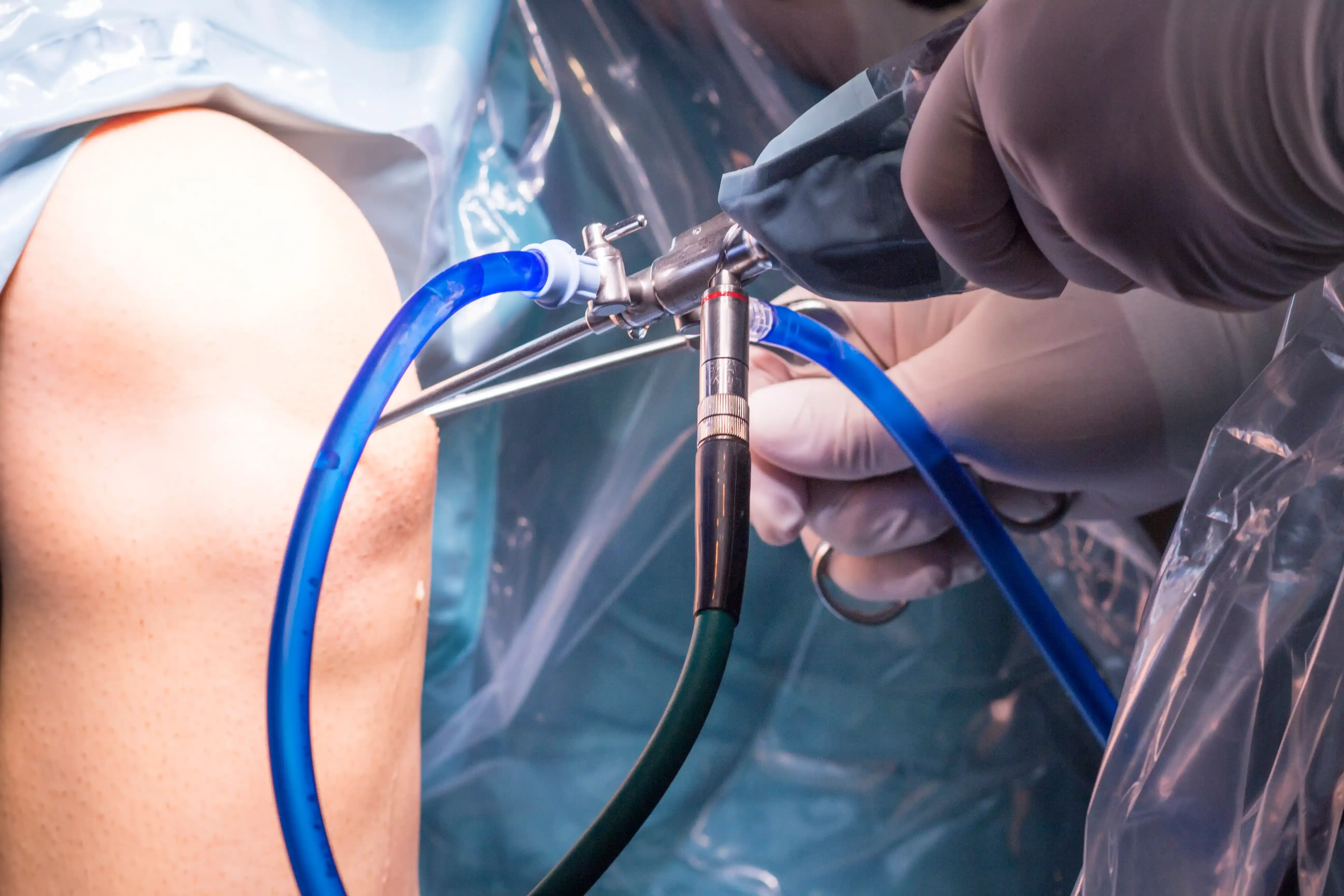
Arthroscopic knee surgery near me lets Dr. Leo Chen look inside the knee with a pencil-thin camera through two or three small incisions. From that same view, he can repair or remove damaged tissue: torn meniscus, loose cartilage fragments, inflamed synovium or a damaged ACL. Because the approach is minimally invasive, most patients go home the same day with less pain, smaller scars and a faster return to activity than traditional open knee surgery.
Minimally invasive joint surgery
Knee arthroscopy is a minimally invasive surgical procedure that uses a small fiber-optic camera, called an arthroscope, to see and treat problems inside the knee joint. Dr. Leo Chen makes two or three small portal incisions (typically 4 to 6 mm), inserts the arthroscope and fills the joint with sterile saline to gently expand the space for a clear view of the cartilage, meniscus, ligaments and synovial lining.
The procedure has two main purposes. Diagnostically, it confirms or clarifies what MRI and physical examination suggest, especially for meniscus tears, articular cartilage damage, ACL injuries and synovial conditions. Therapeutically, the same incisions allow Dr. Leo Chen to treat the problem in the same setting: trimming or repairing torn meniscus, smoothing damaged cartilage, removing loose bodies, releasing tight bands of tissue, addressing patellar (kneecap) tracking issues and reconstructing ligaments such as the ACL when indicated.
Compared with traditional open knee surgery, the arthroscopic approach involves smaller incisions, less soft-tissue disruption, less blood loss and typically a faster recovery. Most knee arthroscopies are performed as outpatient procedures at a local surgery center, meaning you go home the same day with a brace, crutches if needed and detailed aftercare instructions from the Emerald Coast Ortho team.
Less invasive, faster recovery
2000+ Satisfied patients






Two to three portals around 5 mm, leaving minimal scarring.
Same-day surgery with no overnight hospital stay required.
Less tissue trauma means a quicker return to daily activity.
Direct visualization of cartilage, meniscus and ligaments.
Diagnose and treat the problem in the same anesthetic event.
Smaller wounds and shorter operative time reduce risk.
Compare your options
| Treatment | Mechanism | Time | Results | Duration | Downtime | Best For |
|---|---|---|---|---|---|---|
| Knee Arthroscopy | Camera-guided diagnosis and repair of internal knee structures | 30 to 60 minutes | Definitive diagnosis and targeted repair | Long-term, depends on findings | 1 to 6 weeks | Mechanical symptoms, meniscus tears, ligament injuries |
| PRP Injections | Platelet-rich plasma to stimulate healing and reduce inflammation | 15 to 30 minutes | Pain relief and improved function in select tissue injuries | Months, often repeated | Minimal, 1 to 3 days | Mild to moderate cartilage wear and tendon issues |
| Corticosteroid Injections | Anti-inflammatory steroid into the joint to reduce pain and swelling | 10 to 15 minutes | Short-term pain and inflammation relief | Weeks to a few months | None to minimal | Symptom flares, mild osteoarthritis, bridging therapy |
| Non-Operative Care | Physical therapy, bracing, activity modification and medication | Ongoing over weeks | Variable, supports many soft-tissue injuries | Long-term with maintenance | None | Many knee conditions before considering surgery |
Right patient, right indication
Knee arthroscopy is most helpful when symptoms point to a specific mechanical or structural problem inside the joint that has not responded to conservative care, or that requires direct surgical treatment.
Candidacy is always determined in person by Dr. Leo Chen after a focused history, examination and review of imaging.
Dr. Leo Chen reviews your history, examines the knee and discusses imaging from on-site X-ray and prior MRI.
Dr. Leo Chen confirms the indication, explains risks and benefits, and prepares a tailored surgical plan.
The anesthesia team administers general or regional anesthesia for a comfortable, motionless procedure.
Dr. Leo Chen creates two to three small portals, inserts the arthroscope and treats the identified pathology.
Bromley assists in closure, you recover in PACU and start a guided rehab plan with the Emerald Coast Ortho team.
Risks to know
Knee arthroscopy is generally well tolerated, but every surgical procedure carries some risk. Dr. Leo Chen will review the specific risks that apply to your knee and overall health before scheduling.
Common, usually temporary effects include mild to moderate pain at the portal sites, swelling, bruising, stiffness, and occasional clicking as the joint settles. Most patients improve significantly within the first 1 to 2 weeks. Numbness around the incisions is also common and usually resolves over weeks to months.
Less common effects include persistent effusion (swelling), prolonged stiffness, slow wound healing and incomplete relief of pre-operative symptoms.
Rare but serious risks include infection (superficial or deep), deep vein thrombosis (blood clot in the leg) or pulmonary embolism. Patients with risk factors such as smoking, obesity, diabetes or clotting disorders may have higher rates of certain complications.
You will receive written aftercare and warning signs (increasing pain, fever, redness, calf swelling, shortness of breath). Call (850) 864-3339 promptly with concerns or visit the emergency department for severe symptoms.
Knee arthroscopy is a medically necessary procedure for most patients and is typically billed through insurance. The total cost depends on what is found and treated during the procedure, the facility and anesthesia fees, and your specific insurance plan.
Common cost components include the surgeon's fee, facility fee (surgery center or hospital), anesthesia fee, durable medical equipment (brace, crutches, ice machine if recommended) and physical therapy after surgery. Most commercial insurance plans, Medicare and many Medicaid plans cover knee arthroscopy when indicated.
What to discuss at consultation:
Pricing varies by patient and procedure. For specifics about your case, insurance verification or a self-pay estimate, please call Andrea, our patient services representative, at (850) 864-3339. The Emerald Coast Ortho team is committed to transparent communication about costs so you can make an informed decision before scheduling.
Fort Walton Beach, FL
Diplomate, American Board of Orthopaedic Surgery, fellowship trained in sports medicine.
Same-day imaging means a faster diagnosis and surgical plan.
Surgery is offered only when conservative care has been considered.
Twenty-four years serving Okaloosa County with patient-centered care.
Knee arthroscopy is a core sports medicine procedure. Dr. Leo Chen's fellowship training means he understands return-to-sport timelines and what it takes to get active patients back to full function.
Most knee arthroscopies are same-day outpatient procedures performed right here in Fort Walton Beach - no need to travel to a large hospital system for routine knee surgery.
Knee arthroscopy answered
Knee arthroscopy can diagnose meniscus tears, articular cartilage damage, loose bodies, ACL and other ligament injuries, synovitis, plica problems and patellar tracking issues, often clarifying findings seen on MRI.
Most patients walk with support within days and return to desk work within one to two weeks. Full return to sport ranges from six to twelve weeks, depending on whether a meniscus, cartilage or ligament was repaired.
Knee arthroscopy is typically performed under general or regional anesthesia at an outpatient surgery center. The anesthesia team and Dr. Leo Chen will choose the safest, most comfortable option based on your health and the planned procedure.
Risks include infection, bleeding, blood clots, stiffness, nerve irritation, incomplete relief of symptoms, anesthesia reactions and, rarely, the need for additional surgery. Dr. Leo Chen reviews your individual risk profile before scheduling.
Most patients benefit from a structured therapy plan to restore range of motion, strength and stability. The exact timeline depends on what was done inside the knee, and Dr. Leo Chen will coordinate referrals after surgery.
Driving typically resumes once you are off narcotic pain medication, can comfortably bend the knee and confidently perform an emergency stop, often within one to two weeks for the right knee and sooner for the left.