Exam and Imaging
Dr. Leo Chen reviews your history, examines the foot and ankle, and orders same-day digital X-ray on site.

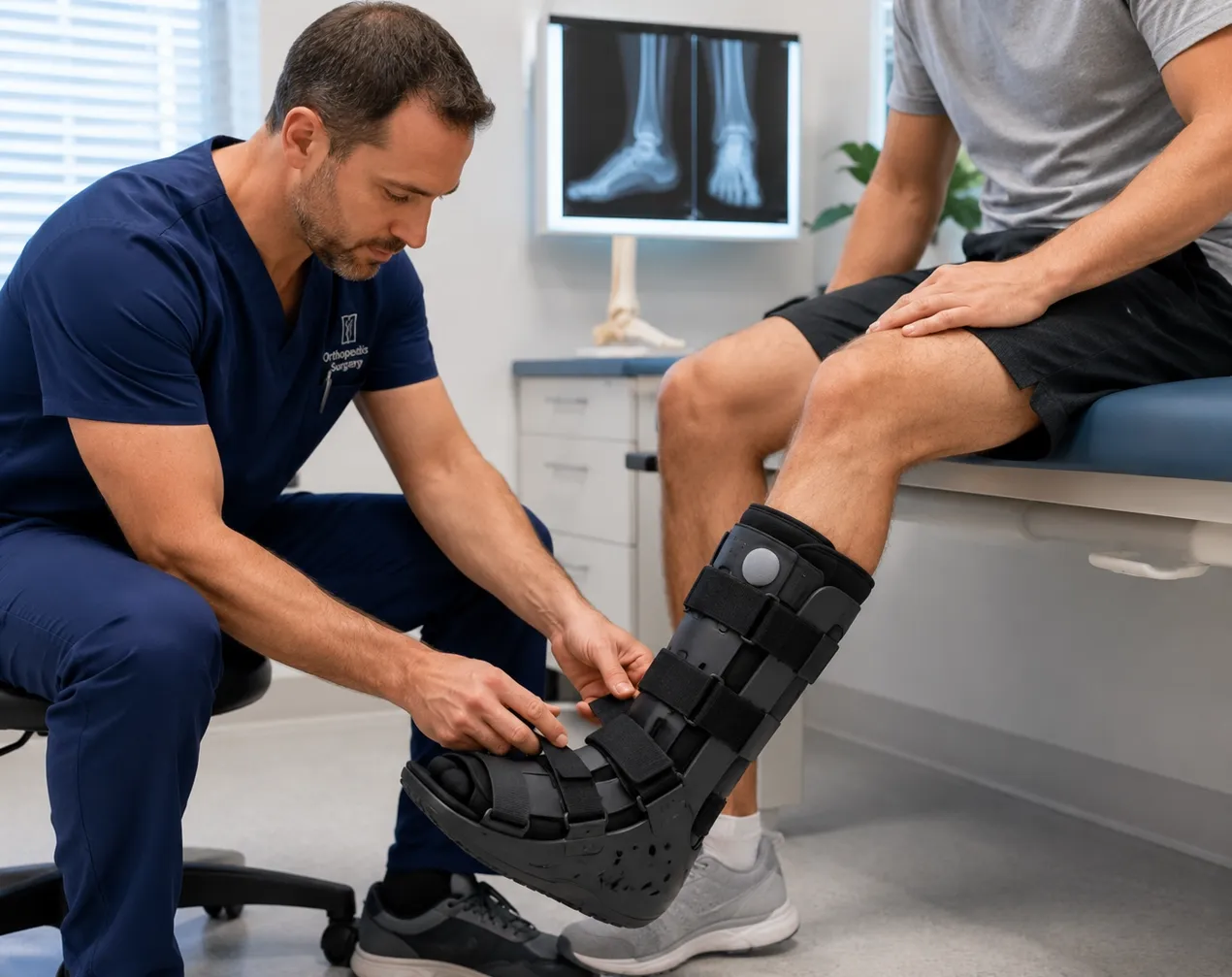
Walker and fracture boots
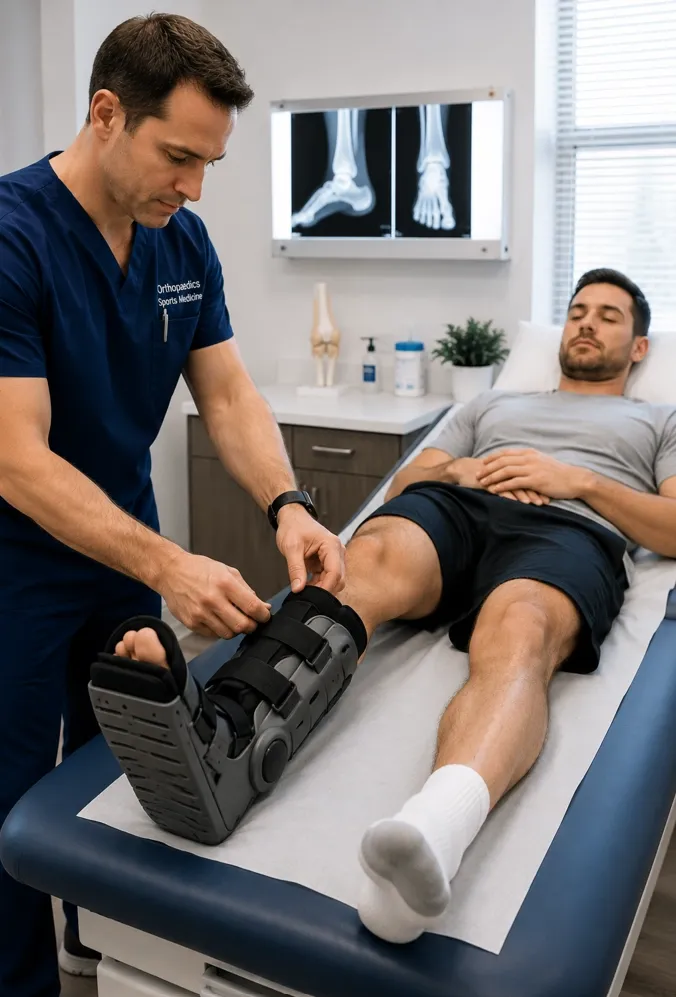
Stability without a hard cast
When you sprain an ankle, fracture a bone in the foot, or finish a procedure on the lower leg, every step adds load to tissue that needs rest. A trip to a busy emergency room often leaves patients with a generic boot, vague instructions, and no follow-up plan. Patients then struggle with boots that pinch, rub, or fit poorly, leading to skin breakdown, calf pain from uneven heel height, and a return to swelling each evening. Without proper sizing and a clear wear schedule, recovery stalls.
An orthopedic boot, also called a CAM walker or fracture boot, immobilizes the foot and ankle while letting you stay mobile and weight-bear when appropriate. Dr. Leo Chen fits each boot to the specific injury, checks pressure points, adjusts air bladders or padding, and pairs it with a written weight-bearing and wear schedule. Same-day digital X-ray on site confirms the diagnosis before the boot goes on, so you walk out with imaging, fitting, and a plan all in one visit.
CAM walker design and function
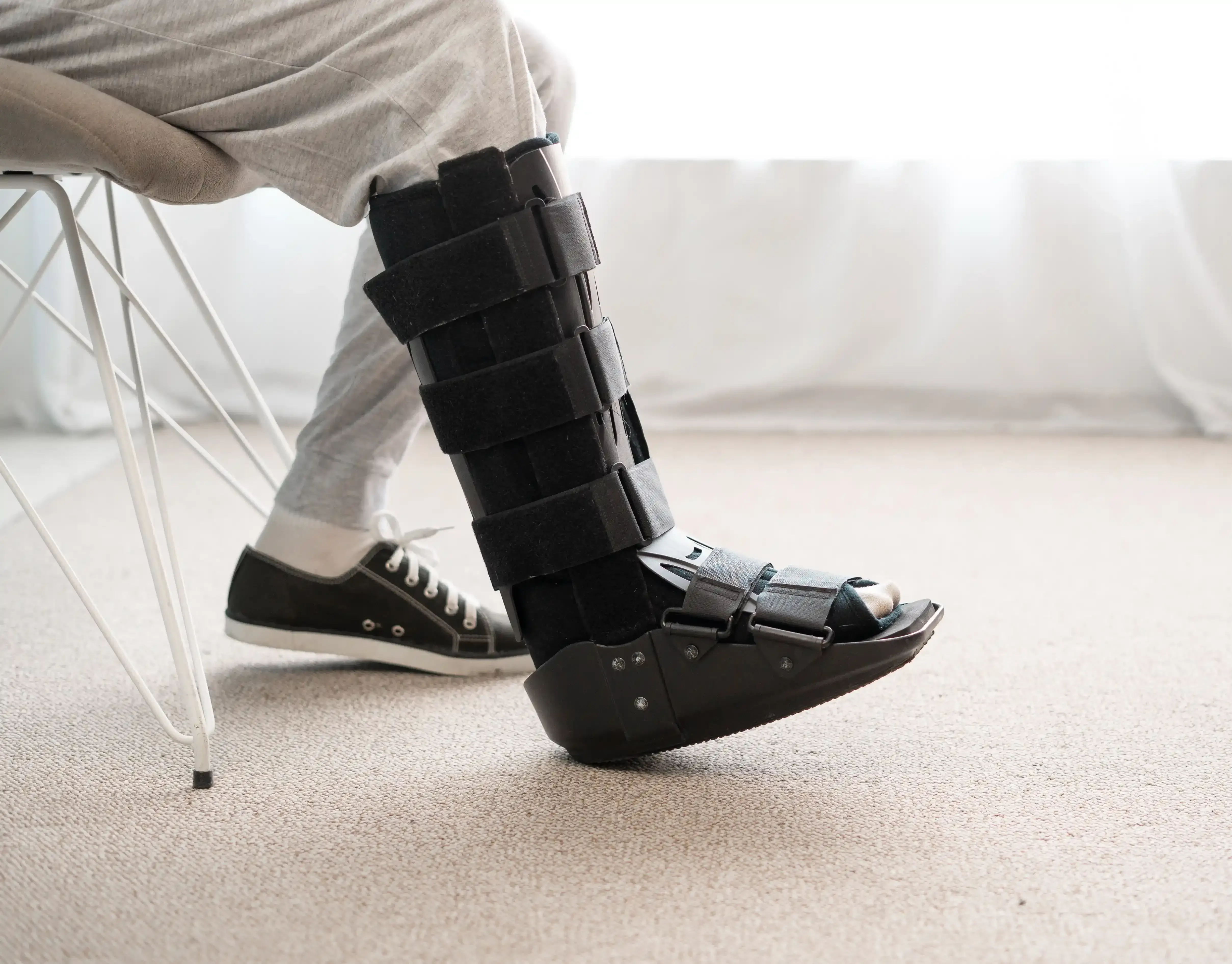
An orthopedic boot, also called a walking boot, walker boot, fracture boot, or CAM (Controlled Ankle Motion) walker, is a removable medical device that immobilizes the foot and ankle. It replaces or supplements a traditional plaster or fiberglass cast for many lower-extremity injuries. A rigid plastic shell, padded liner, and rocker-bottom sole hold the foot in a neutral position, reduce stress across the injured area, and allow controlled weight-bearing.
Walker boots come in two general profiles. A low-top (short) boot extends just above the ankle and is used for forefoot fractures, plantar fasciitis flares, Achilles strains, and stable midfoot injuries. A high-top (tall) boot reaches mid-calf and is used for distal tibia/fibula fractures, severe ankle sprains, post-operative protection, and Achilles tendon repair recovery. Many tall boots include adjustable air bladders that compress evenly around the leg and can be released to ice or check the skin.
The rocker sole is the key biomechanical feature. By curving the bottom of the boot, it lets your leg roll forward through the gait cycle without bending the ankle or flexing the forefoot. This unloads the injured tissue while still letting you walk. Dr. Leo Chen also matches the heel height of the boot to the height of a regular shoe on the uninjured side to reduce hip and back strain during the wear period.
At Emerald Coast Ortho the entire process happens in one visit. Dr. Leo Chen confirms the diagnosis with on-site digital X-ray, selects the right boot height and size, fits and adjusts it, and reviews the weight-bearing protocol with you before you leave. No separate trip to a DME supplier is required.
Vs. casting
2000+ Satisfied patients






Take off for bathing, icing, and skin checks, unlike a hard cast
Air bladders and straps fine-tune compression as swelling changes
Rocker sole permits walking when weight-bearing is allowed
Fitted and sent home from one office visit, no DME supplier trip
Padded liner reduces breakdown vs. circumferential cast material
Compare options
| Treatment | Mechanism | Time | Results | Duration | Downtime | Best For |
|---|---|---|---|---|---|---|
| Walker Boot | Removable rigid shell with rocker sole immobilizes foot and ankle | 10 to 15 min fitting | Protected mobility with stable healing | 2 to 8 weeks wear | Minimal, can drive other foot | Stable fractures, sprains, post-op, plantar fasciitis |
| Casting | Circumferential fiberglass or plaster cast, non-removable | 20 to 30 min application | Maximum immobilization | 4 to 8 weeks until removal | No bathing, no skin access | Unstable or displaced fractures needing strict immobilization |
| Non-Operative Care | Rest, ice, compression, elevation, therapy, no rigid boot | Variable, ongoing | Gradual symptom relief | Weeks to months | Activity restriction only | Mild sprains and tendinopathies with stable imaging |
Indications and contraindications
Dr. Leo Chen recommends a walker boot when imaging and exam point to a stable injury that needs protected motion without the restriction of a hard cast.
Dr. Leo Chen reviews medical history, imaging, and skin condition before fitting any boot to confirm it is the right choice for your injury.
Dr. Leo Chen reviews your history, examines the foot and ankle, and orders same-day digital X-ray on site.
Dr. Leo Chen chooses low-top or high-top based on the injury, your height, and weight-bearing needs.
The boot is sized to your foot, liner adjusted, and air bladders inflated for even compression.
Dr. Leo Chen explains weight-bearing limits, how to remove the boot, and skin-check guidance.
Andrea schedules your next visit so Dr. Leo Chen can recheck imaging and progress.
What to watch for
If you have any concerning symptom, contact Emerald Coast Ortho or seek emergency care. Dr. Leo Chen would rather see you for a quick recheck than have a problem go unaddressed.
Walker boots and fracture boots dispensed in-office are durable medical equipment (DME). They are usually billed through your medical insurance along with the office visit and any imaging performed that day. The exact patient responsibility depends on your plan, deductible, co-insurance, and whether DME has a separate benefit category.
Emerald Coast Sports Medicine and Orthopaedics is an independent practice. Andrea and Troy can review benefits and quote out-of-pocket cost before the boot is fitted. For specifics call (850) 864-3339.
Fort Walton Beach, FL
Dr. Leo Chen is a Diplomate of the American Board of Orthopaedic Surgery
Same-visit imaging confirms the injury before the boot is fitted
Walker boots stocked and fitted on site, no supplier referral needed
Conservative care is prioritized before surgery is considered
Walker boots are billable as durable medical equipment under Medicare, Tricare, and most commercial plans. We handle the paperwork so you leave with your boot the same day.
Walker boots are one tool in a broader fracture care program that includes casting, surgical fixation, and structured rehabilitation - all coordinated at the same Fort Walton Beach practice.
Answers from Dr. Leo Chen
You may need a walking boot if you have a stable fracture in the foot or ankle, a moderate to severe ankle sprain, a post-surgical recovery period, an acute plantar fasciitis flare, or a stress fracture. Dr. Leo Chen confirms with X-ray before fitting.
Wear time is usually 2 to 8 weeks. Forefoot stress fractures often need about 4 weeks, ankle fractures and Achilles repairs can run 6 to 8 weeks, and sprains may need only 1 to 3 weeks. Follow-up X-rays guide the exact timeline.
If the boot is on your left foot and you drive an automatic, driving is usually fine. A boot on your right foot blocks safe braking, so most patients should not drive until cleared. Always confirm with Dr. Leo Chen before getting behind the wheel.
Most commercial plans, Medicare, and Medicare Advantage cover medically necessary walker boots. Patient responsibility depends on your deductible and DME benefit. Andrea can verify your coverage before the boot is fitted.
Yes. Walker boots are removable for bathing, icing, and sleep unless Dr. Leo Chen specifies otherwise. Most patients are told to keep it on whenever they are up and weight-bearing.
Call (850) 864-3339. A quick refit, strap adjustment, or padding change usually fixes pressure points. Do not push through skin pain, especially if you have diabetes or neuropathy.