Evaluation
Dr. Leo Chen reviews your history, examines the joint and may order an on-site X-ray to confirm the diagnosis.

Targeted Joint Pain Relief

From persistent ache to lasting relief
Chronic joint inflammation can quietly steal everyday activities. A swollen knee makes the stairs feel like a mountain. A pinched shoulder turns reaching for a coffee mug into a wince. Hip bursitis interrupts sleep. Tennis elbow makes a handshake hurt. Many patients across Fort Walton Beach try rest, ice, anti-inflammatory pills and physical therapy for months without meaningful improvement. The pain persists, function declines, and the prospect of surgery feels premature.
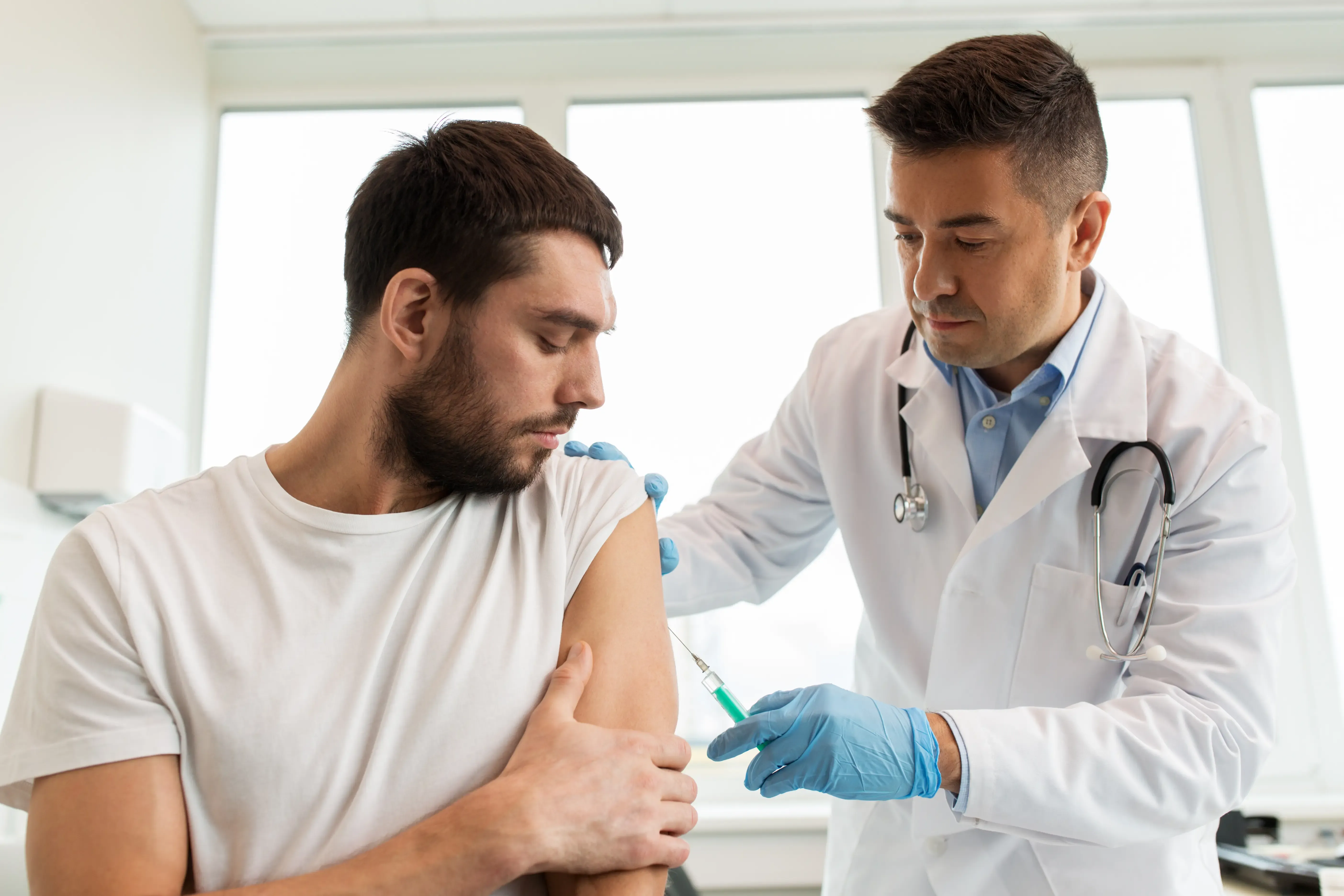
A cortisone injection delivers a potent anti-inflammatory medication directly into the joint, bursa or tendon sheath. Inflammation calms, swelling drops, and the pain signal eases, often within days. That window of relief lets patients re-engage with physical therapy, return to work and rebuild strength. For patients with tendon injuries or early arthritis, Dr. Leo Chen may also discuss PRP injections as a regenerative alternative, or a structured plan for knee pain and shoulder pain management.
Corticosteroid anti-inflammatory therapy
A cortisone injection is an in-office procedure that places a corticosteroid medication, often combined with a local anesthetic, directly into a painful joint, bursa or tendon sheath. Corticosteroids are synthetic versions of cortisol, a hormone the body produces naturally. When injected at the source of inflammation, they suppress the local immune response, reduce swelling and quiet the chemical signals that drive pain.
Cortisone injections are most commonly used to treat osteoarthritis, bursitis, tendonitis, rotator cuff impingement, trigger finger and similar inflammatory orthopedic conditions. Dr. Leo Chen performs these injections in the knee, shoulder, hip, elbow, wrist, hand and ankle. For deeper joints like the hip, Emerald Coast Ortho uses on-site digital X-ray to guide the needle for accurate placement.
The medication does not regrow cartilage or repair structural damage. Instead, it provides a window of inflammation control so patients can return to physical therapy, daily activity and exercise, which together drive long-term improvement. To protect the joint and surrounding soft tissues, most orthopedic guidelines recommend limiting cortisone injections to three or four per joint per year, spaced at least three months apart.
Targeted, predictable relief
2000+ Satisfied patients






Many patients feel improvement within 2 to 5 days of injection.
Medication is placed directly at the inflamed joint or tendon.
Avoids or delays the need for joint replacement or arthroscopy.
Takes 5 to 15 minutes with no general anesthesia required.
Reduces pain enough to participate fully in physical therapy.
Decades of clinical evidence and FDA-approved corticosteroid formulations.
How options compare
| Treatment | Mechanism | Time | Results | Duration | Downtime | Best For |
|---|---|---|---|---|---|---|
| Cortisone Injections | Anti-inflammatory corticosteroid placed at the joint | 5 to 15 minutes | Felt in 2 to 5 days | 6 weeks to 6 months | 24 to 48 hours rest | Inflammatory flares, arthritis, bursitis |
| PRP Injections | Concentrated platelets from your blood promote healing | 45 to 60 minutes | Felt in 2 to 6 weeks | 6 to 12 months or longer | 1 to 3 days soreness | Tendon injuries, early arthritis, sports recovery |
| Non-Operative Care | Physical therapy, NSAIDs, bracing, activity modification | Weeks to months | Gradual over weeks | Sustained with adherence | Minimal | Mild to moderate orthopedic conditions |

Honest screening, clear plan
Cortisone injections work best for patients with localized inflammation that has not responded adequately to rest, anti-inflammatory medication or physical therapy. Dr. Leo Chen reviews your history, examines the joint and may order an X-ray to confirm the diagnosis before recommending an injection.
Dr. Leo Chen will only recommend a cortisone injection when the benefits clearly outweigh the risks for your specific situation.
Dr. Leo Chen reviews your history, examines the joint and may order an on-site X-ray to confirm the diagnosis.
The skin is cleaned with antiseptic and a small amount of local anesthetic numbs the injection site.
Dr. Leo Chen places the corticosteroid using palpation or X-ray guidance for deep joints like the hip.
You rest briefly, then test gentle range of motion. Most patients walk out within 15 minutes of the injection.
Dr. Leo Chen reviews aftercare, physical therapy referral if appropriate and a clear timeline for follow-up.
Honest expectations
Cortisone injections have a strong safety record when performed by a board-certified orthopedic surgeon, but every medical procedure carries some risk. Dr. Leo Chen reviews your individual risks before any injection.
Common, short-lived effects: A post-injection flare of pain in the first 24 to 48 hours occurs in roughly 1 in 20 patients as the crystalline steroid settles. Mild bruising, soreness or warmth at the injection site is normal. Some patients notice facial flushing for a day or two. Patients with diabetes may see a transient rise in blood sugar lasting 3 to 7 days.
Uncommon effects: Skin lightening (hypopigmentation) or thinning of the skin and subcutaneous fat at the injection site can occur, especially with superficial injections. Temporary loss of efficacy with repeated injections is well documented.
Rare but serious risks: Joint infection occurs in fewer than 1 in 10,000 cases when proper sterile technique is used. Tendon weakening or rupture is rare and is why we avoid injecting directly into weight-bearing tendons like the Achilles. Rarely, repeated cortisone use within a joint can accelerate cartilage thinning, which is why we cap dosing at 3 to 4 injections per joint per year.
Call our office at (850) 864-3339 right away if you experience increasing pain after 48 hours, fever, redness spreading from the site or new weakness in the joint.
Cortisone injections at Emerald Coast Sports Medicine and Orthopaedics are typically billed through your medical insurance. Coverage usually includes the office visit, the injection procedure (CPT code based on the joint), the medication and any necessary X-ray imaging. Most commercial insurance plans, Medicare and Tricare cover medically necessary corticosteroid injections, though the patient share depends on your deductible, copay and coinsurance.
Out-of-pocket pricing varies by joint, whether image guidance is used and the specific medication chosen. Smaller joints (fingers, wrist) typically cost less than larger or deeper joints (shoulder, hip) that may require X-ray guidance for accurate placement.
What to bring up at consultation:
For a personalized estimate, call our front office at (850) 864-3339. Our team will verify your benefits, explain your expected patient responsibility before the visit and confirm whether any prior authorization is required by your insurance plan.
Fort Walton Beach, FL
Every injection performed by Dr. Leo Chen, not a tech or PA.
Same-day digital X-ray guides accurate joint placement.
We exhaust conservative options before recommending surgery.
24 years of patient-centered orthopedic care in Okaloosa County.
PRP, epidural steroid, and facet joint injections also available at the same Fort Walton Beach practice.
Every injection is paired with a structured follow-up and rehabilitation pathway so relief lasts.
Patient-asked, surgeon-answered
Relief typically begins within 2 to 5 days and lasts anywhere from 6 weeks to 6 months. Duration depends on the joint, the underlying condition, your activity level and whether you pair the injection with physical therapy.
Most orthopedic guidelines recommend a maximum of 3 to 4 cortisone injections per joint per year, spaced at least 3 months apart, to limit the risk of cartilage thinning and tendon weakening over time.
Most patients report mild pressure or a brief sting during the injection. Dr. Leo Chen uses a local anesthetic to numb the skin first. Soreness at the injection site is common for the first 24 to 48 hours, then improves.
Cortisone injections treat inflammatory orthopedic conditions including osteoarthritis of the knee, hip, shoulder and elbow, bursitis, tendonitis, rotator cuff impingement, trigger finger and similar soft tissue inflammation.
Light activity and desk work can usually resume the same day. We recommend resting the joint for 24 to 48 hours before heavier exercise or impact sports. Most patients return to full activity within 2 to 3 days.
No. Cortisone calms inflammation and reduces pain but does not repair cartilage or reverse arthritis. It buys a window of relief that helps you participate in physical therapy and daily activity, which together drive long-term function.