Consultation
Dr. Leo Chen reviews symptoms, performs a focused hand exam, and confirms the diagnosis of stenosing tenosynovitis.


End Finger Locking and Catching
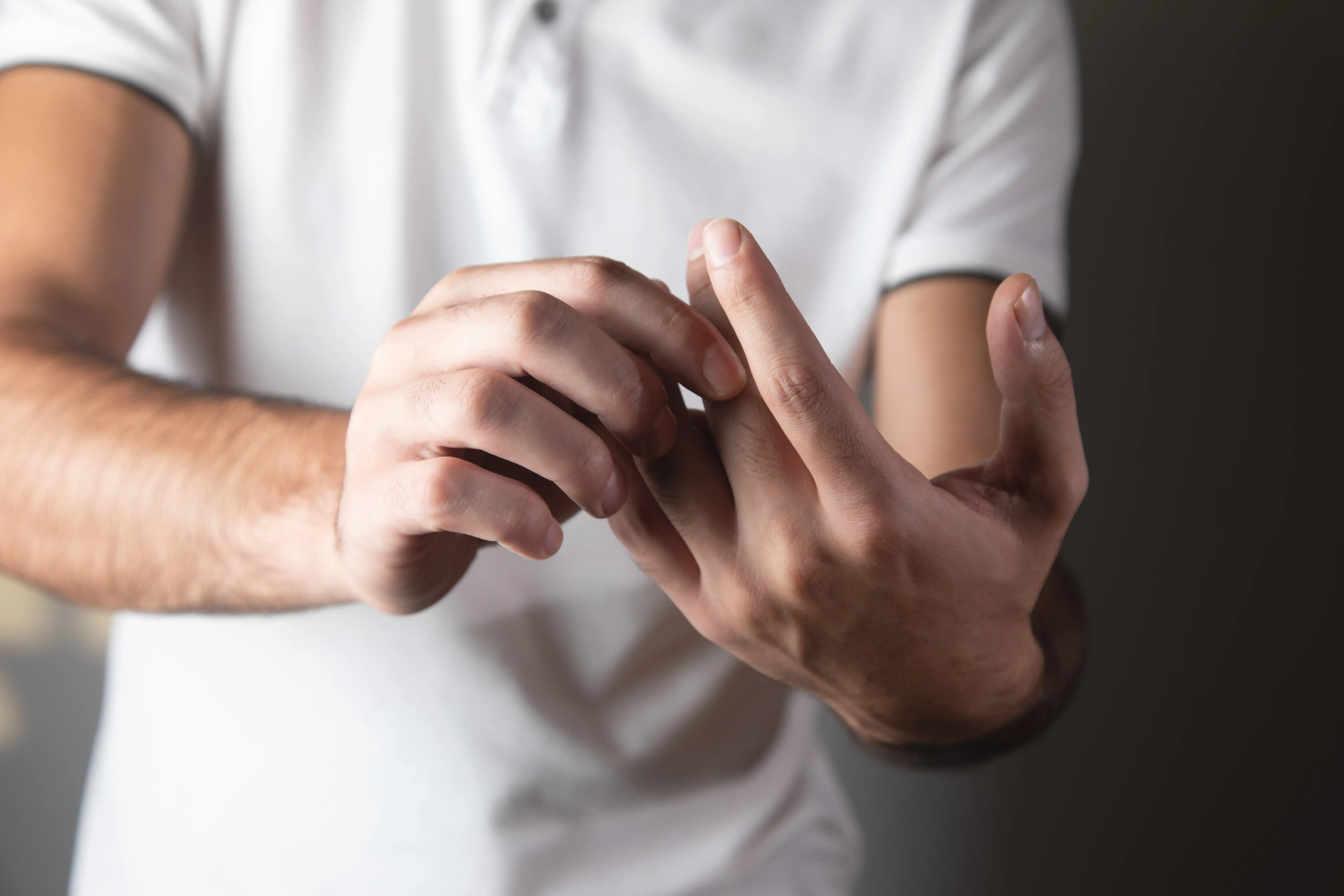
Restore smooth, painless motion
Trigger finger (stenosing tenosynovitis) develops when the A1 pulley at the base of a finger or thumb thickens and narrows around the flexor tendon. Patients describe a painful catch when bending the finger, a snap or pop when straightening it, a tender nodule in the palm, and stiffness that is worst in the morning. As inflammation progresses, the finger can lock in a bent position, requiring the other hand to pry it straight. Daily tasks like gripping a steering wheel, holding a coffee mug, or buttoning a shirt become frustrating and painful.
Trigger finger release is a short outpatient procedure that addresses the mechanical problem directly. Through a small incision in the palm, Dr. Leo Chen carefully divides the A1 pulley, the constricted band of tissue that is squeezing the tendon. As part of our hand surgery care, the procedure pairs naturally with carpal tunnel surgery in Fort Walton Beach when nerve symptoms coexist. Once released, the tendon glides freely again, and catching, locking, and pain typically resolve immediately. The procedure is performed under local anesthesia, takes about 15 to 20 minutes, and most patients return home the same day.
A1 Pulley Release Surgery
Trigger finger release is a surgical procedure that opens the narrowed A1 pulley at the base of an affected finger or thumb so the flexor tendon can glide smoothly again. It is the definitive treatment for stenosing tenosynovitis that has not responded to splinting, activity modification, or corticosteroid injections.
The flexor tendons of the hand run through a series of fibrous tunnels, called pulleys, that hold them close to the bone and allow precise finger motion. The A1 pulley is the first of these tunnels at the base of each finger. When the tendon or its sheath becomes inflamed, the tendon develops a small nodule that no longer slides easily through the narrowed pulley. The tendon catches, then pops through, producing the classic triggering sensation. By dividing the A1 pulley, Dr. Leo Chen eliminates the constriction without affecting overall finger strength or function, because the remaining pulleys continue to support the tendon.
The procedure is performed through a small incision (typically 1 to 2 centimeters) in the crease of the palm. Dr. Leo Chen identifies and protects the digital nerves and the flexor tendon, then divides only the A1 pulley. Patients can often demonstrate full, smooth finger motion on the operating table before the incision is closed. A few absorbable sutures or non-absorbable stitches close the skin, and a soft dressing is applied.
Quick, definitive relief
2000+ Satisfied patients






Catching and locking typically stop the moment the pulley is divided.
Most releases take 15 to 20 minutes under local anesthesia.
Outpatient surgery with no general anesthesia and no overnight stay.
Published recurrence rates after open release are low, generally under 3 percent.
Light hand use within days, full use in roughly 4 to 6 weeks.
Several fingers can be released in the same setting when needed.
Compare your options
| Treatment | Mechanism | Time | Results | Duration | Downtime | Best For |
|---|---|---|---|---|---|---|
| Trigger Finger Release | Divides constricted A1 pulley | 15 to 20 minutes | Immediate resolution of triggering | Long-term, low recurrence | Light use in days, full use 4 to 6 weeks | Persistent or locking trigger finger |
| Corticosteroid Injections | Reduces tendon sheath inflammation | 5 minutes in office | Relief in days to weeks | Variable, may require repeat injections | None | Early or mild trigger finger |
| Non-Operative Care | Splinting, activity modification, NSAIDs | Ongoing, weeks to months | Gradual symptom improvement | Often partial, symptoms may recur | None | First-line care for new or mild cases |

Surgical candidacy criteria
Trigger finger release is most appropriate for patients whose symptoms have not resolved with conservative treatment or whose finger locks frequently enough to interfere with daily activities.
Dr. Leo Chen reviews your symptoms, exam findings, and prior treatments at consultation and only recommends surgery when it is clearly the right step.
Dr. Leo Chen reviews symptoms, performs a focused hand exam, and confirms the diagnosis of stenosing tenosynovitis.
The palm is cleansed and Dr. Leo Chen injects local anesthetic over the A1 pulley so the procedure is comfortable.
Through a small palm incision, Dr. Leo Chen carefully divides the A1 pulley while protecting the digital nerves and tendon.
You bend and straighten the finger on the table so Dr. Leo Chen can confirm full, smooth glide before closing.
A soft dressing is applied, you go home the same day, and stitches are removed at the 10 to 14 day follow-up.
What to know
Trigger finger release is considered a safe, well-studied hand surgery with a low overall complication rate. Dr. Leo Chen reviews the specific risks and benefits with you at consultation so you can make an informed decision.
Common, expected effects (usually resolve within 1 to 3 weeks):
Less common effects:
A tender or thickened scar, temporary numbness or tingling around the incision as small skin nerves recover, persistent stiffness that responds to a brief course of hand therapy
Rare complications:
Wound infection requiring antibiotics, injury to a digital nerve, band treatable when recognized early
Contact Emerald Coast Ortho promptly if you notice spreading redness, increasing pain, drainage, fever, or new numbness after surgery.
Trigger finger release is a medically necessary procedure and is typically covered by health insurance, Medicare, and most workers' compensation plans when conservative treatment has failed. The exact out-of-pocket cost depends on your individual plan, deductible, copay, and whether the procedure is performed in the office or at an affiliated surgery center.
What goes into the total cost
Insurance and payment
Emerald Coast Ortho participates with most major commercial insurers, Medicare, and Florida workers' compensation. Our team will verify your benefits before surgery, explain anticipated out-of-pocket costs, and confirm any pre-authorization required by your plan. For patients without insurance or with high-deductible plans, we offer transparent self-pay pricing for the procedure and follow-up visits.
What to discuss at consultation
For specific pricing and to schedule your evaluation, call (850) 864-3339 and our team will walk you through your options.
Fort Walton Beach, FL
Diplomate, American Board of Orthopaedic Surgery with Emory and UT Southwestern training.
Splinting and corticosteroid injections offered before surgical release is recommended.
Same-day digital X-ray and in-office splints, no extra travel between providers.
Direct access to Dr. Leo Chen from consultation through recovery, no rotating providers.
Trigger finger release is performed under local anesthesia as a brief outpatient procedure - most patients are home within an hour and using the hand within days
Trigger finger release is part of a broader hand surgery practice that includes carpal tunnel surgery and wrist fracture care, all performed by Dr. Leo Chen at the same Fort Walton Beach office.
Trigger finger release answered
The procedure itself is performed under local anesthesia, so you should feel only the initial numbing injection. Most patients report mild soreness, not sharp pain, for a few days afterward, well controlled with over-the-counter pain relievers.
Light hand use typically resumes within 2 to 5 days. Stitches are removed at 10 to 14 days, and most patients return to full activities including driving, lifting, and gripping within 4 to 6 weeks.
Yes. Mild or new cases often respond to splinting, activity modification, and one to two corticosteroid injections. Dr. Leo Chen recommends surgical release only when these non-operative measures have not resolved the locking or catching.
Recurrence in the same finger after open A1 pulley release is uncommon, generally reported under 3 percent in published studies. However, patients with diabetes or rheumatoid arthritis can develop trigger finger in other digits over time.
Most patients drive comfortably within 5 to 10 days, once the dressing is reduced and they can grip the steering wheel without significant soreness. Wait until you can safely control the vehicle in an emergency.
Most patients do not need formal hand therapy. Dr. Leo Chen will guide you through simple home motion exercises. If stiffness persists, a short course of hand therapy can help restore full motion.