Evaluation
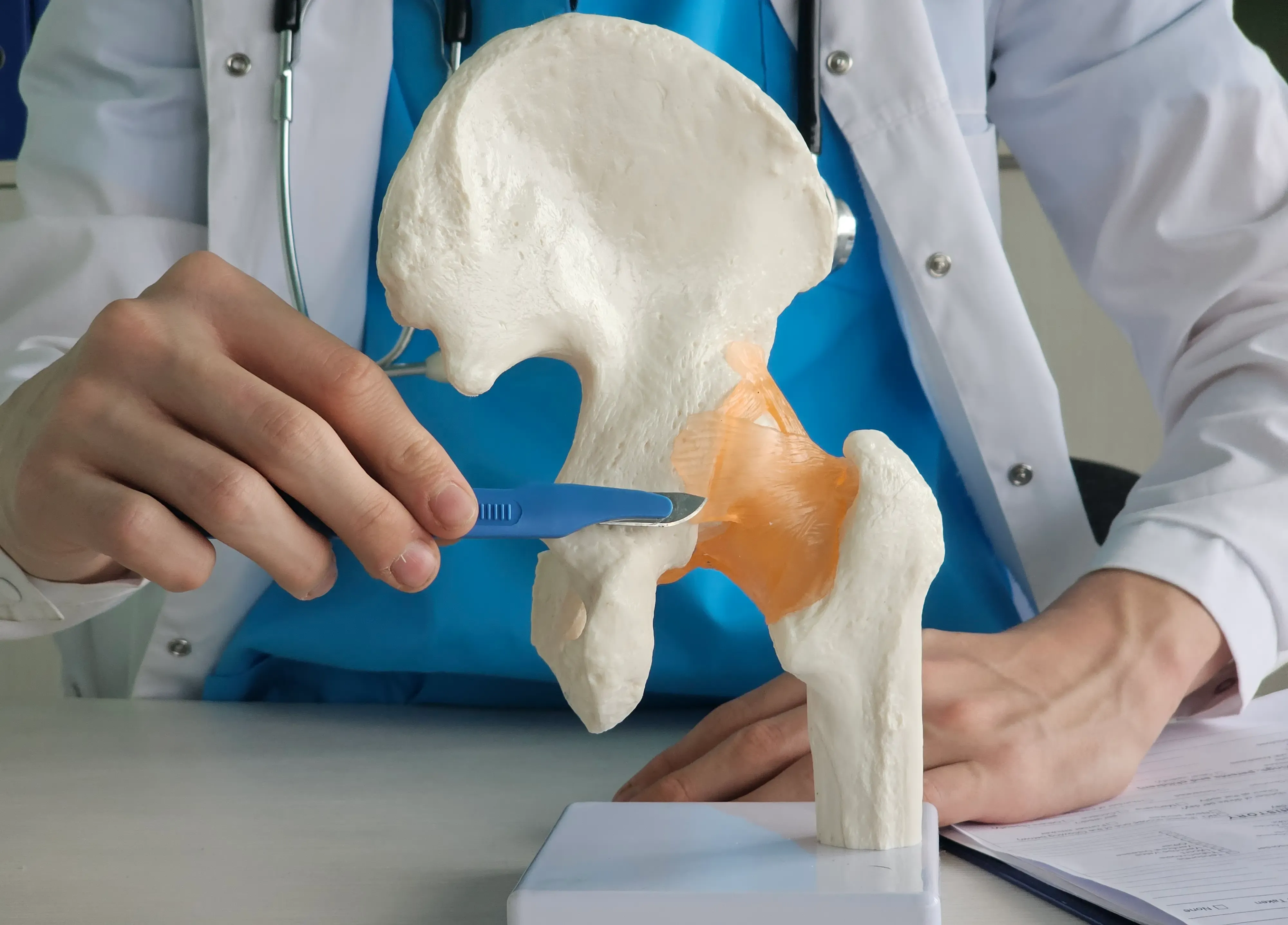
Dr. Leo Chen reviews your symptoms, examines your hip, and orders on-site digital X-rays for surgical planning.

Restore Pain-Free Movement
Understanding Advanced Hip Arthritis
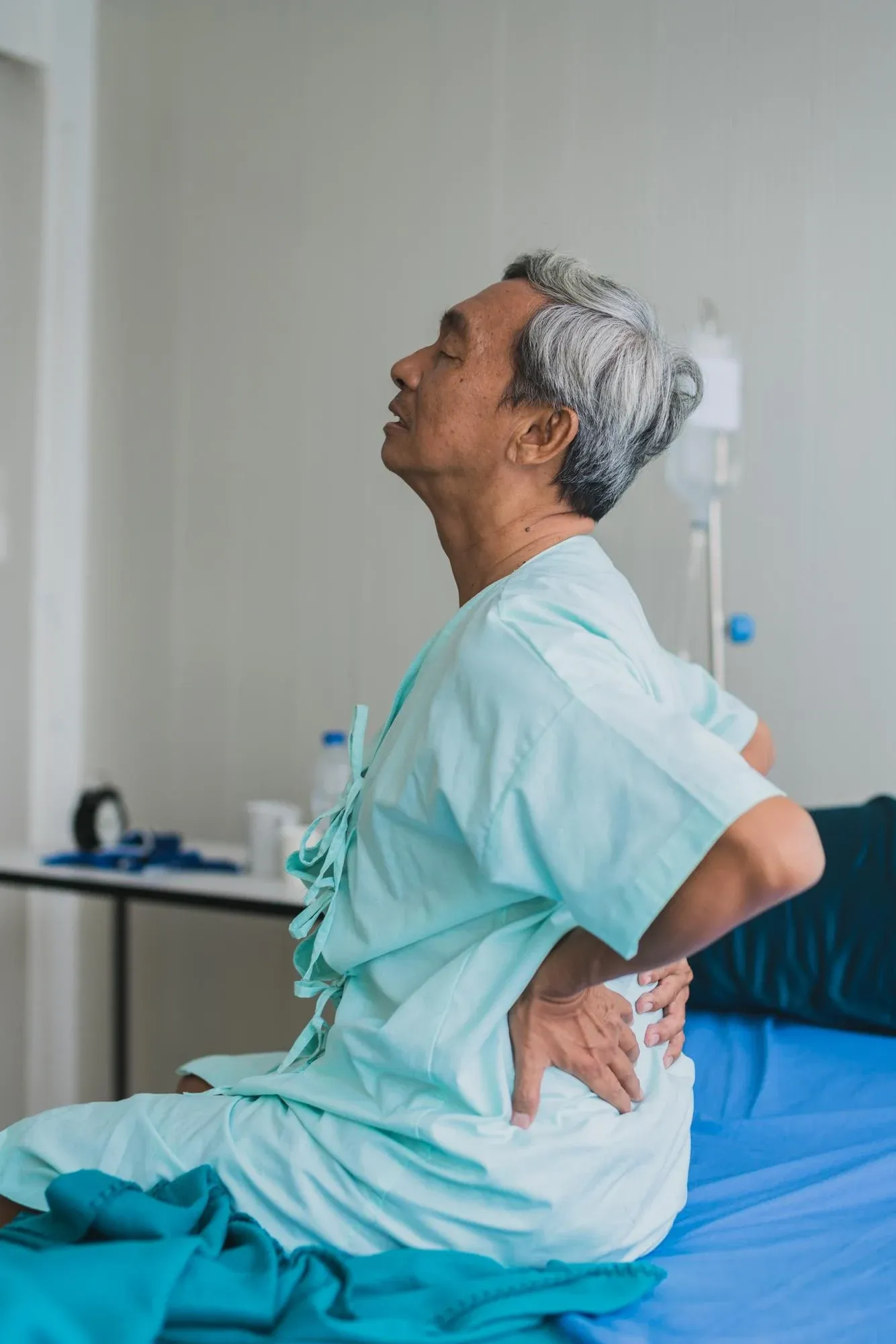
Chronic hip pain changes everything. You may struggle to climb stairs, get out of a chair, or sleep through the night. Walking to the mailbox becomes exhausting, putting on shoes feels impossible, and golf or beach walks in Fort Walton Beach feel out of reach. Many patients describe a deep ache in the groin, stiffness after sitting, or a grinding sensation when they move. Cartilage damage from osteoarthritis, degenerative joint disease, or avascular necrosis means bone rubs on bone, and conservative care can no longer keep up with the pain.
Total hip replacement, also called total hip arthroplasty, replaces the damaged ball and socket of the hip with a precision implant. Dr. Leo Chen uses durable metal, ceramic, and medical-grade polyethylene components to recreate smooth, pain-free movement. Patients typically stand the day of surgery, walk with assistance within 24 hours, and return to driving, walking, golf, and time with grandchildren in the weeks that follow. The goal is a stable, comfortable hip that supports an active life across Okaloosa, Walton, Santa Rosa, and Escambia counties for decades.
The Science of Hip Arthroplasty
Hip replacement surgery, medically known as total hip arthroplasty, is an FDA-regulated orthopedic procedure that replaces a worn or damaged hip joint with an artificial implant called a prosthesis. The procedure addresses end-stage hip arthritis, degenerative joint disease, avascular necrosis (loss of blood supply to the femoral head), post-traumatic arthritis, and certain hip fractures when joint preservation is no longer possible.
The hip is a ball-and-socket joint. During surgery, Dr. Leo Chen removes the damaged femoral head (the ball at the top of the thigh bone) and reshapes the acetabulum (the socket in the pelvis). A metal stem is then secured into the femur, topped with a smooth ceramic or metal ball, and a durable polyethylene liner is fitted into a metal cup placed in the socket. The result is a low-friction, biomechanically stable joint that restores natural hip motion. Modern implant designs have a survivorship rate of approximately 90 to 95 percent at 15 years, with many lasting 20 to 25 years or longer.
Dr. Leo Chen performs total hip replacement using either the anterior approach (incision at the front of the hip) or the posterior approach (incision behind the hip), and selects the technique based on your anatomy, bone quality, soft-tissue condition, and activity goals. Both approaches are well-supported by published outcomes data and use modern instrumentation for accurate component positioning.
Reliable, Long-Lasting Relief
2000+ Satisfied patients






Most patients experience dramatic reduction in chronic hip pain.
Walk, climb stairs, drive, and sleep without disabling hip pain.
Modern prostheses commonly last 15 to 25 years or longer.
Resume walking, golf, swimming, and travel within months.
Hip replacement has over 90 percent satisfaction at 10 years.
Patients regularly report restful nights free of hip pain.
Compare Your Options
| Treatment | Mechanism | Time | Results | Duration | Downtime | Best For |
|---|---|---|---|---|---|---|
| Hip Replacement | Replaces joint surfaces | 1.5 to 2 hours | Pain relief within weeks | 15 to 25 years | 6 to 12 weeks | End-stage hip arthritis |
| Corticosteroid Injections | Reduces joint inflammation | 10 to 15 minutes | Onset in days | Weeks to a few months | 1 to 2 days | Mild to moderate flare-ups |
| PRP Injections | Concentrated platelets aid healing | 30 to 45 minutes | Gradual over 4 to 8 weeks | 6 to 12 months | 1 to 3 days | Earlier-stage joint pain |

Finding Your Best Outcome
Hip replacement is most appropriate for adults whose hip pain and stiffness no longer respond to conservative care like physical therapy, anti-inflammatory medication, weight management, activity modification, or hip injections. During your consultation, Dr. Leo Chen will evaluate your imaging, range of motion, gait, and overall health to determine whether total hip arthroplasty is the right path.
Dr. Leo Chen will review your full medical history, current medications, and imaging during your consultation to confirm whether hip replacement is the safest and most effective option for you.
Dr. Leo Chen reviews your symptoms, examines your hip, and orders on-site digital X-rays for surgical planning.
Dr. Leo Chen, anesthesia, and the OR team confirm your plan, position you safely, and administer general or spinal anesthesia.
Dr. Leo Chen removes the damaged femoral head, prepares the socket, and implants the metal, ceramic, and polyethylene components.
Dr. Leo Chen oversees early mobilization, pain control, and physical therapy starting the day of or after surgery.
Dr. Leo Chen monitors your healing with structured visits and same-day on-site X-rays as needed.
What to Know
Hip replacement is one of the most successful and well-studied orthopedic procedures, with high satisfaction rates and durable outcomes. Like any major surgery, however, it carries risks that Dr. Leo Chen will review thoroughly during your consultation.
Common, typically short-term effects include surgical-site soreness, bruising, swelling, mild stiffness, and temporary limp. Most resolve within several weeks as therapy progresses. Patients are also commonly prescribed blood thinners during recovery to reduce clot risk.
Less common complications - DVT, pulmonary embolism, leg-length discrepancy, hip dislocation (especially weeks 6 to 12), and nerve or vessel irritation - usually resolve with treatment.
Rare but serious ones include deep joint infection (about 1 percent), implant loosening or wear, periprosthetic fracture, and anesthesia reactions. Dr. Leo Chen minimizes these with strict sterile technique, modern implants, and DVT prevention, plus on-site imaging and direct surgeon access if needed.
Call Emerald Coast Ortho at (850) 864-3339 right away, or go to the nearest emergency department, if you develop a fever, spreading redness, warmth or drainage at the incision, calf pain or swelling, chest pain, or shortness of breath after surgery.
Hip replacement is a medically necessary procedure used to treat advanced hip arthritis, degenerative joint disease, and related conditions. As a result, total hip arthroplasty is typically covered by Medicare, Medicare Advantage plans, and most commercial health insurance plans when criteria are met. Your final out-of-pocket cost depends on your specific plan, deductible, copay, coinsurance, and any facility or anesthesia fees.
During your consultation with Dr. Leo Chen, our team will review your insurance coverage, explain the surgical plan, and help you understand your expected financial responsibility. Because every plan is different, we strongly encourage you to contact us directly so we can verify benefits for you. Patients with earlier-stage hip pain may also explore PRP injections to support healing or corticosteroid injections before considering surgery.
For specific pricing, insurance verification, and payment options for hip replacement in Fort Walton Beach, please call Emerald Coast Sports Medicine and Orthopaedics at (850) 864-3339. Our team serves patients across Okaloosa, Walton, Santa Rosa, and Escambia counties and is happy to walk you through what your plan covers. Patients also frequently ask about knee replacement in Fort Walton Beach for combined joint care.
Fort Walton Beach's Trusted Surgeon
Dr. Leo Chen is a Diplomate, American Board of Orthopaedic Surgery.
Same-day imaging supports faster diagnosis and precise surgical planning.
Dr. Leo Chen personally manages your evaluation, surgery, and follow-up.
24 years of patient-centered care across Okaloosa County and beyond.
Sports medicine fellowship training from UT Southwestern gives Dr. Leo Chen a deep understanding of joint biomechanics, implant selection, and active patient recovery.
Hip replacement is covered under Medicare, Medicare Advantage, and most major commercial plans. Our team verifies benefits and handles prior authorization before your surgery date.
Your Questions Answered
Most patients walk with assistance within 24 hours, transition off walkers or canes in 2 to 6 weeks, and return to routine activity in 6 to 12 weeks. Full recovery and return to low-impact sports such as walking, golf, and swimming typically occurs by 3 to 6 months.
The anterior approach uses an incision at the front of the hip and works between muscles, often allowing slightly faster early mobility. The posterior approach uses an incision behind the hip. Both have excellent long-term outcomes. Dr. Leo Chen selects the approach based on your anatomy, bone quality, and activity goals.
Hip replacement is generally considered when hip pain limits walking, sleep, or daily activity and no longer responds to therapy, medication, weight management, or injections. Imaging that confirms end-stage arthritis or joint damage supports the decision. Dr. Leo Chen will help you decide based on your symptoms and X-rays.
Modern hip implants commonly last 15 to 25 years, with many patients enjoying decades of pain-free function. Survivorship at 15 years is approximately 90 to 95 percent. Implant lifespan depends on activity level, weight, bone quality, and adherence to follow-up care.
Yes. Hip replacement is medically necessary for advanced hip arthritis and joint disease and is typically covered by Medicare and most commercial insurance plans when criteria are met. Call (850) 864-3339 to verify your benefits.