Preparation
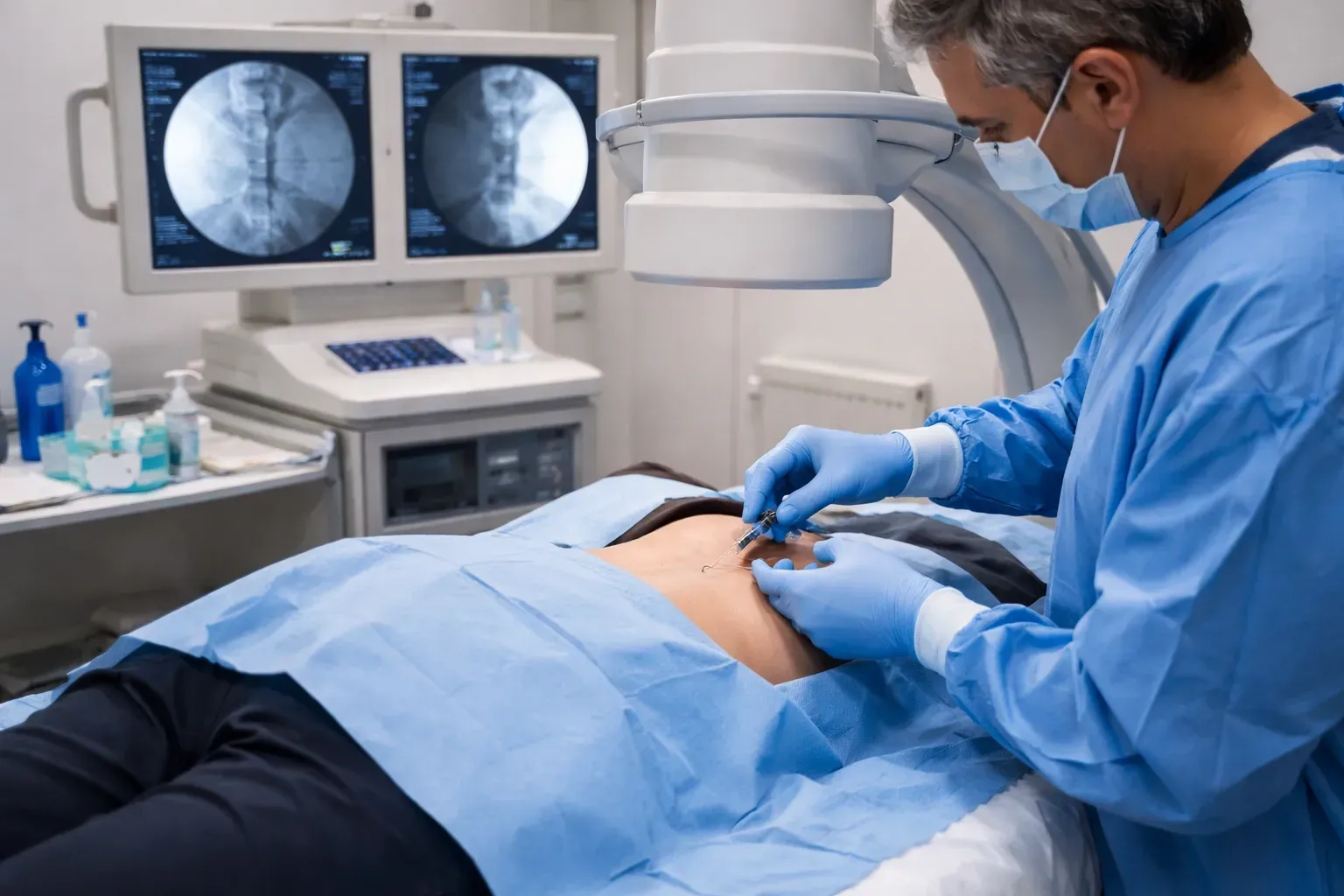
Dr. Leo Chen reviews your MRI and exam, then positions you face down for image guidance.

Targeted Spine Pain Relief

Understanding Spinal Nerve Inflammation
A herniated disc, bulging disc, bone spur or narrowing of the spinal canal can compress the nerve roots that travel from your low back into your hips, buttocks and legs. Many patients describe a deep, burning ache that radiates down one leg, electric-shock pain with certain movements, numbness or tingling in the foot, or low back pain and chronic pain that makes walking on the beach in Destin or standing through a workday in Crestview painful. Oral anti-inflammatories, physical therapy and rest sometimes help, but stubborn inflammation around the nerve keeps the pain coming back.
An epidural steroid injection delivers a small, precise dose of corticosteroid medication directly into the epidural space around the inflamed spinal nerve, where it can reduce swelling at the source. Dr. Leo Chen uses fluoroscopic image guidance to place the medication at the exact level causing your radiculopathy, sciatica or spinal stenosis symptoms. When facet joints are also a pain generator, Dr. Leo Chen may recommend facet joint injections in Fort Walton Beach as a complementary option. Most patients feel meaningful relief within a few days to two weeks, allowing them to participate more fully in physical therapy and return to walking, working and sleeping with less pain.
The Science of Targeted Spine Injection
An epidural steroid injection (ESI) is a minimally invasive, image-guided procedure in which Dr. Leo Chen delivers a corticosteroid medication, often combined with a small amount of local anesthetic, into the epidural space of your spine. The epidural space is the cushioned area surrounding the protective sac of your spinal cord and nerve roots. Placing anti-inflammatory medication here can calm the swelling around an irritated nerve and reduce the radiating pain it produces.
Epidural steroid injection near me is most commonly used for radiculopathy (pinched nerve), lumbar or cervical disc herniations, spinal stenosis and sciatica. Dr. Leo Chen tailors the approach to your imaging and exam findings. There are three primary techniques: an interlaminar injection places medication between two vertebrae from the back of the spine, providing a broader spread of medication. A transforaminal injection uses the small opening where the nerve exits the spine, delivering medication very close to a specific nerve root. A caudal injection enters through a natural opening at the base of the sacrum and is often used for lower lumbar or multi-level symptoms.
Fluoroscopic image guidance and contrast dye are used to confirm correct needle placement before the medication is delivered. Peer-reviewed evidence from the National Library of Medicine (PMID 28461312) supports epidural steroid injections as an effective non-surgical option for many patients with lumbar radicular pain, particularly when combined with physical therapy and activity modification.
Non-Surgical, Targeted Relief
2000+ Satisfied patients






Medication delivered to the exact inflamed nerve, not just the bloodstream
May postpone or avoid the need for back or neck surgery
Typically completed in 15 to 30 minutes with minimal downtime
Fluoroscopy confirms accurate placement for safety and effectiveness
Reduced pain allows fuller participation in physical therapy and rehab
Most patients go home the same day and resume light activity quickly
Compare Your Options
| Treatment | Mechanism | Time | Results | Duration | Downtime | Best For |
|---|---|---|---|---|---|---|
| Epidural Steroid Injection | Anti-inflammatory medication around spinal nerve | 15 to 30 min | 2 days to 2 weeks | 6 weeks to 6 months | 1 day | Radiculopathy, sciatica, spinal stenosis |
| Facet Joint Injections | Anti-inflammatory medication into spinal facet joint | 10 to 20 min | Within days | Weeks to several months | 1 day | Facet joint arthritis, axial low back pain |
| Non-Operative Care | Physical therapy, oral medication, activity changes | Ongoing | Gradual over weeks | Variable | None | Mild to moderate pain, early or recurring symptoms |

Finding Your Best Path Forward
Epidural steroid injections are most helpful when imaging shows a structural cause for your nerve pain (such as a herniated disc, bone spur or spinal stenosis) and conservative care has not provided enough relief. During your consultation, Dr. Leo Chen will review your MRI or CT scan, examination findings and prior treatments to determine whether an interlaminar, transforaminal or caudal approach is right for you.
Every candidacy decision is individualized. Dr. Leo Chen will review your full medical history, current medications and imaging before recommending an epidural steroid injection or an alternative treatment path.
Dr. Leo Chen reviews your MRI and exam, then positions you face down for image guidance.
Dr. Leo Chen cleans the area and injects local anesthetic to numb the skin and soft tissue.
Using fluoroscopy and contrast dye, Dr. Leo Chen confirms the needle is in the correct epidural location.
Dr. Leo Chen slowly injects the corticosteroid and anesthetic mixture around the inflamed nerve.
You rest briefly in recovery, receive aftercare instructions and head home the same day.
What to Know
Epidural steroid injections are generally well tolerated, but every procedure carries some risk. The most common side effects are temporary and minor: soreness or bruising at the injection site, a brief increase in pain during the first 24 to 48 hours (sometimes called a steroid flare), facial flushing and difficulty sleeping for a night or two as the steroid takes effect.
Include temporary elevation of blood sugar in patients with diabetes, mild fluid retention, headache, transient changes in mood and a temporary disturbance in menstrual cycle.
Rare but serious risks include allergic reaction to the medication or contrast dye, infection of the spinal tissues, bleeding around the spine, nerve injury and inadvertent puncture of the dura that can cause a post-procedure headache. With image guidance and modern technique, the risk of serious complications is very low (PMID 31094842).
Call Emerald Coast Ortho at (850) 864-3339 right away if you develop a fever, spreading redness or drainage at the injection site, a severe headache that worsens when you sit or stand up, or new weakness, numbness, or loss of bowel or bladder control. For sudden or severe symptoms, seek care at the nearest emergency department.
Epidural steroid injections in Fort Walton Beach, FL are considered medically necessary procedures for radiating back and leg pain and are typically covered by Medicare, Medicare Advantage plans and most commercial health insurance plans. Your out-of-pocket cost depends on your specific plan, deductible, coinsurance, copay and whether the injection is performed in the office or an ambulatory surgery center.
At your consultation with Dr. Leo Chen, our team will review your insurance benefits, explain the components of your bill (physician fee, facility fee, fluoroscopy, medication and any follow-up therapy) and provide a personalized estimate. For specific pricing questions or to verify your benefits before scheduling, please call our office at (850) 864-3339. Self-pay options may be available for patients without insurance coverage. Emerald Coast Ortho is committed to transparent, honest pricing so you can plan with confidence.
Fort Walton Beach's Trusted Surgeon
Dr. Leo Chen, Diplomate of the American Board of Orthopaedic Surgery
ESIs offered to help you avoid or postpone spine surgery when appropriate
Same-day imaging for evaluation, planning and post-injection follow-up
24 years serving Fort Walton Beach with patient-centered, transparent care
Facet joint, corticosteroid, and PRP injections also available at the same Fort Walton Beach practice.
We serve Fort Walton Beach's active military and retiree community with accepted Tricare and Medicare plans.
Your Questions Answered
Most patients experience meaningful relief lasting from 6 weeks to several months, with some reporting benefit for up to a year. Duration depends on the underlying cause, severity of nerve inflammation and how well the injection is combined with physical therapy and home exercise.
Dr. Leo Chen typically considers up to 3 injections within a 12-month period for the same area, spaced at least a few weeks apart, depending on your response. The total number is individualized and balances pain relief with long-term effects on bone and tissue.
Most patients describe brief pressure or a pinch as the local anesthetic numbs the skin, followed by mild pressure during medication delivery. Light sedation is available if you prefer. Dr. Leo Chen and the clinical team prioritize comfort throughout the short procedure.
ESIs are commonly used for lumbar and cervical radiculopathy, sciatica, herniated or bulging discs, spinal stenosis and chronic radiating back or neck pain that has not responded to physical therapy, oral medication and activity changes.
Many patients notice initial relief within 2 to 7 days as the corticosteroid takes effect, with peak benefit between weeks 1 and 2. Some experience a brief increase in pain during the first 24 to 48 hours before relief begins.
Epidural steroid injections for documented radiculopathy or spinal stenosis are typically covered by Medicare and most commercial plans. Out-of-pocket costs depend on your deductible, coinsurance and site of service. Call (850) 864-3339 to verify your benefits before scheduling.