Evaluation
Dr. Leo Chen reviews your history, examines your wrist and identifies the injured structure

Wrist Brace Near Me
Stabilize, protect, heal
A swollen, painful or unstable wrist makes everyday tasks (typing, lifting a coffee cup, gripping a steering wheel) feel impossible. Sprains, carpal tunnel flare-ups, fractures and post-surgical wrists need targeted support to heal. Off-the-shelf drugstore braces often fit poorly, slide around or apply pressure in the wrong places. Without proper immobilization, healing slows and re-injury becomes more likely. Patients also lose time chasing prescriptions across multiple offices and pharmacies before they ever start treatment.
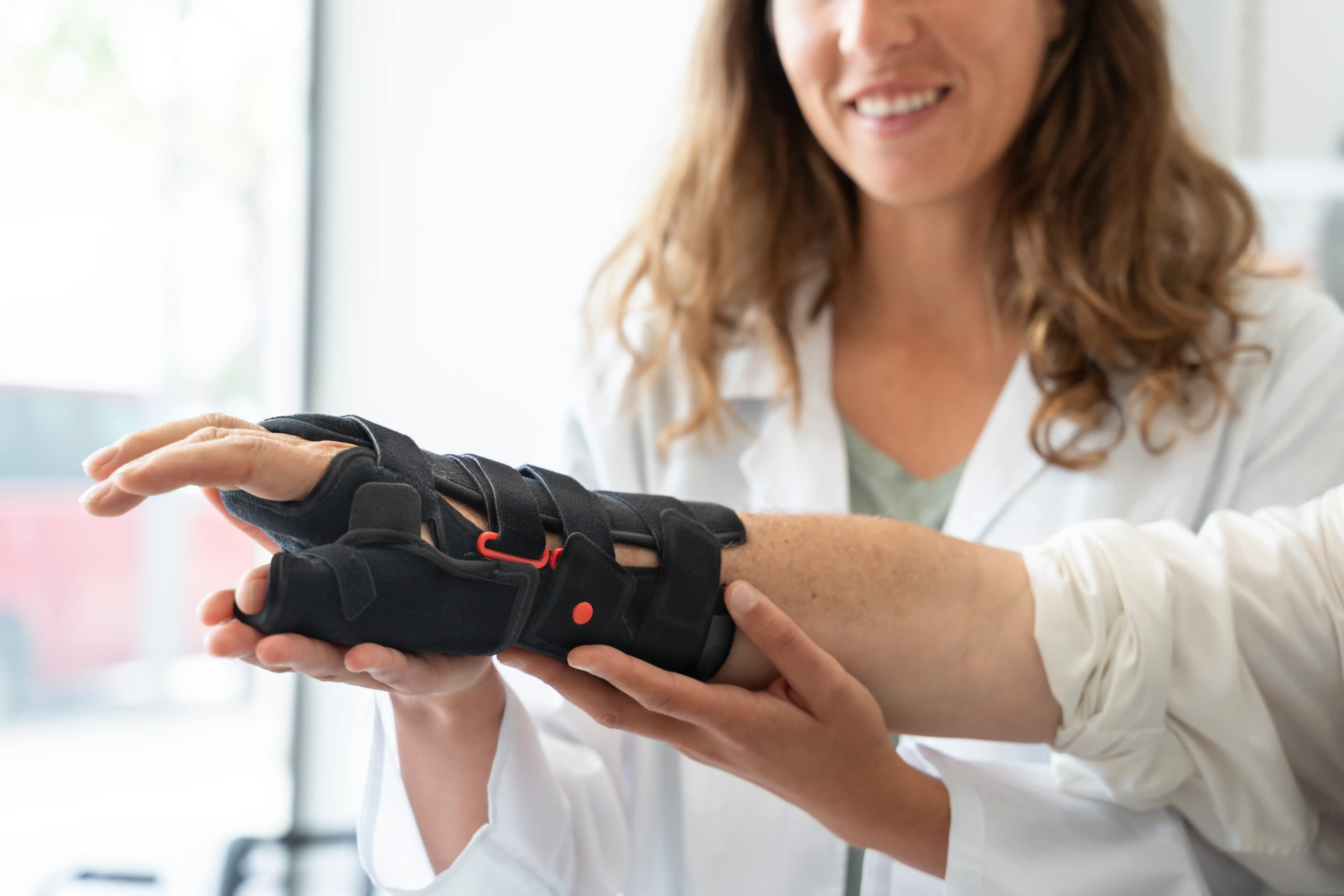
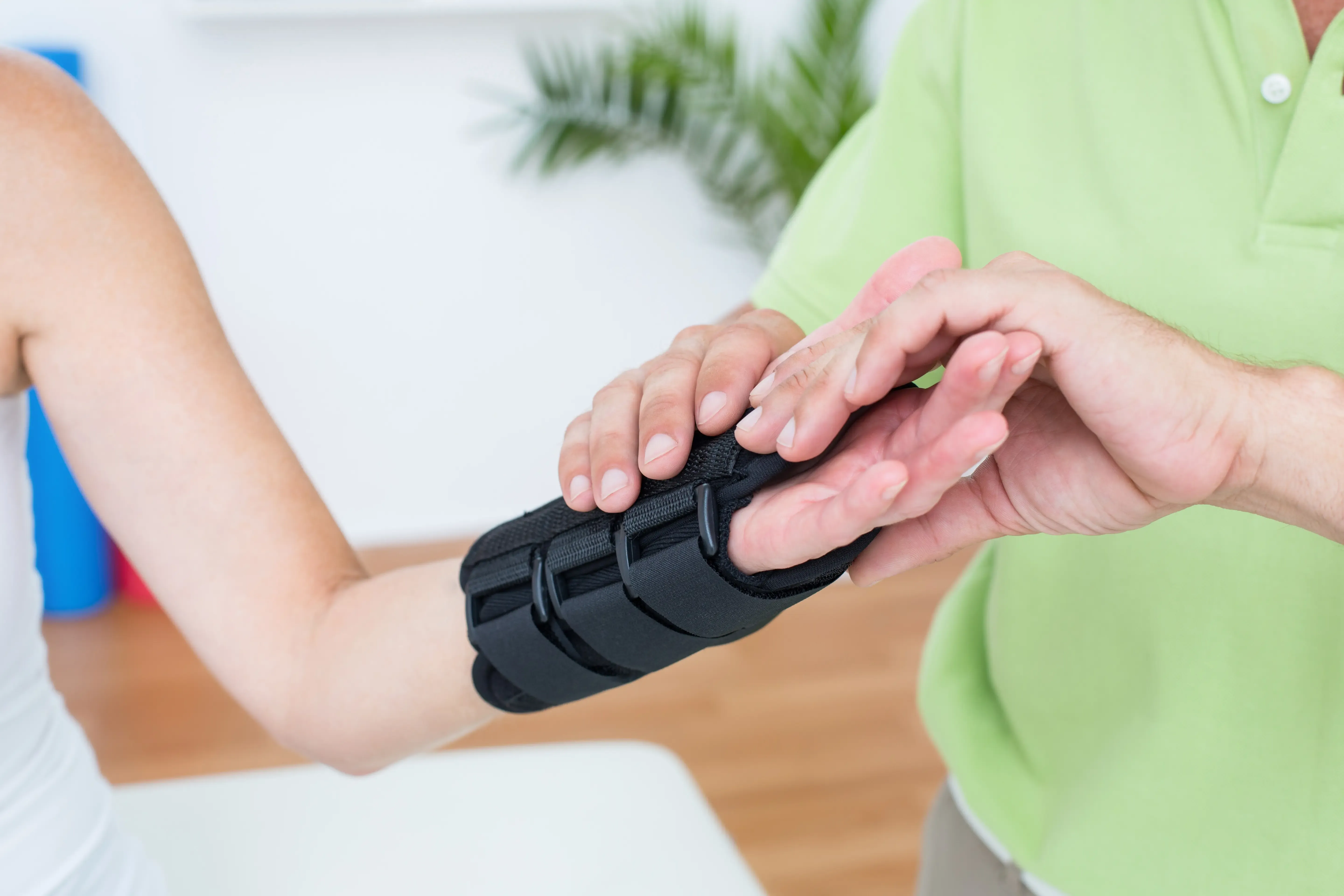
A properly fitted wrist brace from your orthopedic surgeon's office controls motion at the right joints, offloads injured tissue and protects healing structures. At Emerald Coast Ortho, Dr. Leo Chen evaluates your wrist, orders same-day digital X-ray if indicated, and fits the right brace on the spot. We stock off-the-shelf cock-up splints, carpal tunnel night splints, scaphoid spica braces and post-operative braces, and we custom-mold when an off-the-shelf option will not work. You leave your visit braced and ready to heal.
Orthopedic immobilization device
A wrist brace is an external orthopedic device that immobilizes or restricts motion at the wrist (radiocarpal) and sometimes the thumb (carpometacarpal) joint. By limiting motion in painful or healing tissue, a wrist brace reduces inflammation, protects ligaments and tendons during recovery, and offloads compressed structures such as the median nerve in carpal tunnel syndrome.
Wrist braces fall into several categories. Cock-up splints (sometimes called wrist immobilizers) hold the wrist in a neutral or slightly extended position and are common for sprains, tendinitis and post-cast transitions. Carpal tunnel night splints keep the wrist neutral during sleep to prevent the bent-wrist positions that compress the median nerve. Thumb spica and scaphoid spica braces add a thumb component to protect a sprained ulnar collateral ligament or a suspected scaphoid fracture. Post-operative braces are heavier and are used after wrist surgery (carpal tunnel release, fracture fixation, ligament repair) until early healing is complete.
At Emerald Coast Ortho we dispense both off-the-shelf braces (sized small through extra-large with adjustable straps and removable stays) and custom-fabricated thermoplastic splints when an off-the-shelf brace will not work for the patient's anatomy or injury pattern. Off-the-shelf braces work well for most sprains, mild carpal tunnel and short-term post-injury support. Custom splints are useful for unusual hand size, ulnar-sided wrist pain, complex post-op cases and patients who have failed standard bracing. Dr. Leo Chen and the team decide which option is right at the visit, based on exam findings, X-ray and your activity demands.
Targeted support
2000+ Satisfied patients






Walk out braced after one in-office visit
Controls motion at the joint that needs to heal
Protects tissue so healing happens on schedule
Often resolves symptoms without injections or surgery
Thermoplastic molding for hard-to-fit wrists
Most plans cover medically necessary braces with a prescription
Compare options
| Treatment | Mechanism | Time | Results | Duration | Downtime | Best For |
|---|---|---|---|---|---|---|
| Wrist Bracing | Removable external support that restricts motion | 15 to 30 minute fitting | Immediate symptom relief in many patients | 2 to 8 weeks typical | None, brace removable for hygiene | Sprains, carpal tunnel, post-op support, mild arthritis |
| Casting | Rigid fiberglass or plaster fully immobilizing the wrist | 20 to 30 minute application | Maximum immobilization for bone healing | 4 to 8 weeks continuous wear | Cast stays on, limited bathing | Fractures and unstable injuries requiring full immobilization |
| Non-Operative Care | Activity modification, anti-inflammatories, therapy and injections | Multiple visits over weeks | Variable based on diagnosis and adherence | Weeks to months | Minimal | Tendinitis, arthritis flares and chronic overuse conditions |

Right fit for the right injury
Wrist bracing is a first-line, non-operative option for a wide range of wrist injuries and chronic conditions. The right brace, fitted properly, can speed recovery, prevent re-injury and reduce the need for stronger interventions.
Dr. Leo Chen performs a full wrist exam and reviews same-day X-rays when needed to confirm that bracing is the right next step (and not casting, injection or surgery).
Dr. Leo Chen reviews your history, examines your wrist and identifies the injured structure
If indicated, our radiology team performs same-day digital X-ray to rule out fracture
Dr. Leo Chen selects an off-the-shelf or custom brace based on diagnosis and anatomy
The team fits, adjusts straps and (when needed) heat-molds the brace to your wrist
You learn how to wear, remove, clean and care for the brace plus follow-up timing
What to watch for
Wrist bracing is one of the safest orthopedic interventions, but proper fit and follow-up are still important. Most patients tolerate bracing without any side effects.
Common, mild and short-term: skin irritation under straps, mild itching, sweating beneath the brace in warm weather, temporary stiffness when first removing the brace, and pressure marks that fade within minutes. These usually resolve with minor adjustments, padding or alternating brace position.
Uncommon: pressure sores from a brace that is too tight or worn over a bony prominence, contact dermatitis from brace materials, and stiffness from prolonged immobilization.
Rare but important: nerve compression (numbness, tingling or weakness in the hand) from an overly tight brace, circulation problems, and joint stiffness that requires hand therapy.
Call our office at (850) 864-3339 immediately if you develop new numbness, color change, severe pain or fever. With proper fit and follow-up, the vast majority of patients complete bracing with no lasting side effects.
Wrist braces and the orthopedic visit to fit them are typically covered by health insurance when medically necessary. Coverage depends on your specific plan, diagnosis and whether your deductible has been met. Most commercial insurance plans, Medicare and many Medicaid plans cover prescribed durable medical equipment (DME) such as wrist braces.
At Emerald Coast Sports Medicine and Orthopaedics we bill your insurance directly for both the office visit and the brace. Out-of-pocket costs depend on your copay, deductible, coinsurance and the specific brace prescribed. Off-the-shelf braces are generally lower cost than custom-molded splints, but both are commonly covered with the right documentation.
Self-pay pricing is available for patients without insurance or who prefer to pay directly. Off-the-shelf wrist braces and the associated office visit are typically a manageable out-of-pocket expense, and we will quote you a price before any brace is dispensed. We do not surprise patients with charges after the visit.
Before your appointment we recommend calling your insurance to confirm orthopedic and DME benefits. Our team can also help verify coverage if you call (850) 864-3339 ahead of time. At the visit, Dr. Leo Chen will discuss brace options, expected costs and any alternatives (such as casting or non-operative therapy) so you can make an informed decision.
Fort Walton Beach, FL
Braces fitted and dispensed same day, no pharmacy run required
On-site digital X-ray rules out fractures during the same visit
Every brace is selected by a board-certified orthopedic surgeon
Standard sizes plus custom thermoplastic molding when needed
Wrist braces are prescribed as part of a broader treatment plan that may include casting, corticosteroid injections, or carpal tunnel surgery - all available at the same Fort Walton Beach practice.
Wrist braces are billable as durable medical equipment under Medicare, Tricare, and most commercial plans. We handle the paperwork so you leave with your brace the same day.
Answers from our team
Wrist sprains, mild to moderate carpal tunnel syndrome, tendinitis (including de Quervain's), suspected scaphoid injuries, mild arthritis flare-ups and post-operative wrists all commonly need bracing. Dr. Leo Chen confirms with exam and imaging.
Most sprains and tendinitis cases need 2 to 4 weeks of bracing. Carpal tunnel night splinting often continues 4 to 6 weeks or longer. Post-surgical bracing follows your surgeon's protocol, usually 4 to 8 weeks.
The terms are often used interchangeably. Technically a splint is a more rigid, often custom-molded device while a brace can include softer fabric supports. Both immobilize the wrist; the right choice depends on the injury.
Most commercial insurance plans, Medicare and many Medicaid plans cover prescribed wrist braces as durable medical equipment when medically necessary. Coverage depends on your plan, diagnosis and deductible.
Yes, and for carpal tunnel night splinting that is the whole point. For sprains and post-op cases, follow Dr. Leo Chen's instructions on when to wear it at night and when you can remove it.
Most patients do not need a referral. Some insurance plans (notably some HMOs) require a primary care referral before seeing an orthopedic specialist. Call (850) 864-3339 and our team can help check your plan.