Clinical Exam
Dr. Leo Chen reviews your history and performs a focused exam to decide if x-ray is needed.

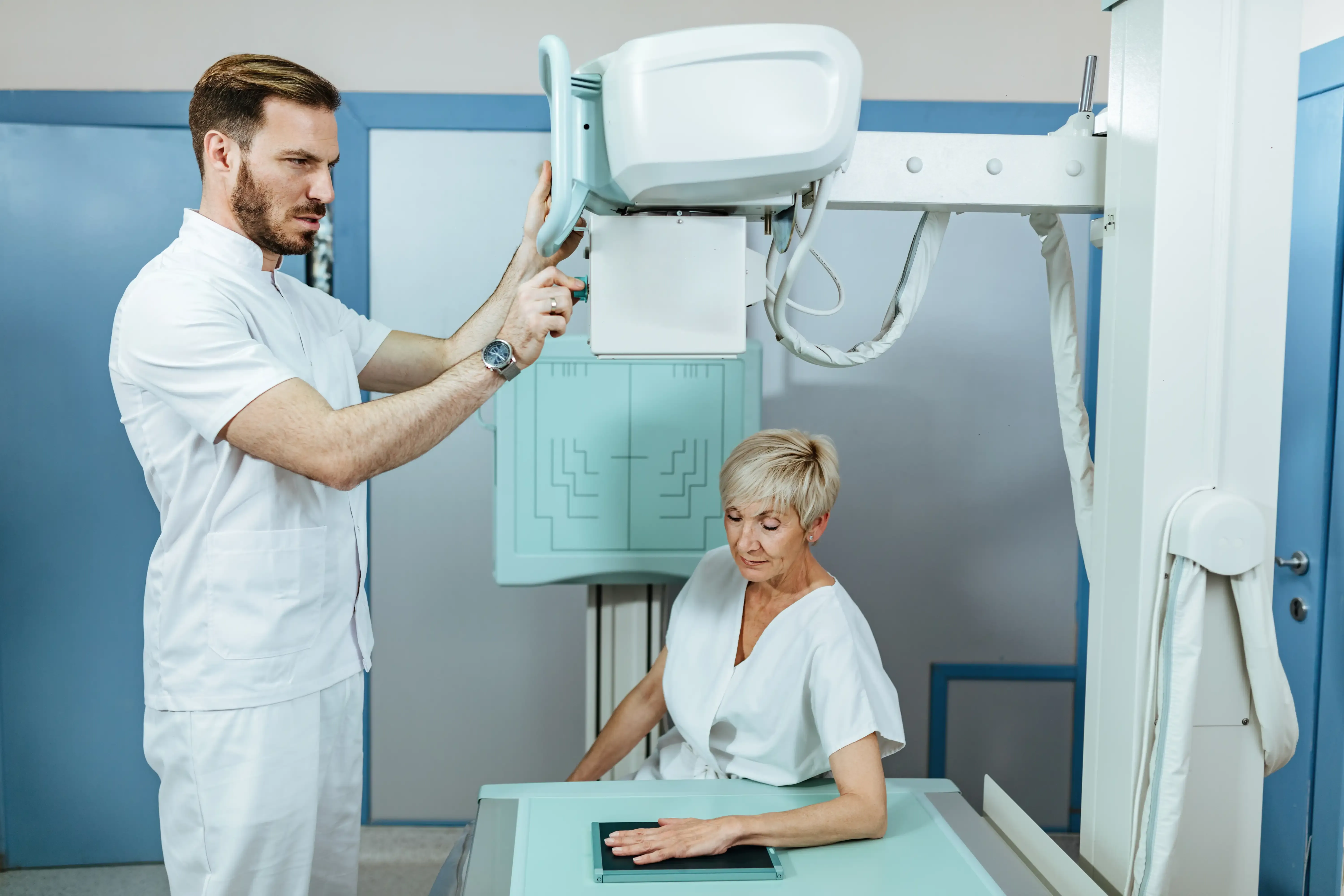
Same-Day Digital Radiography
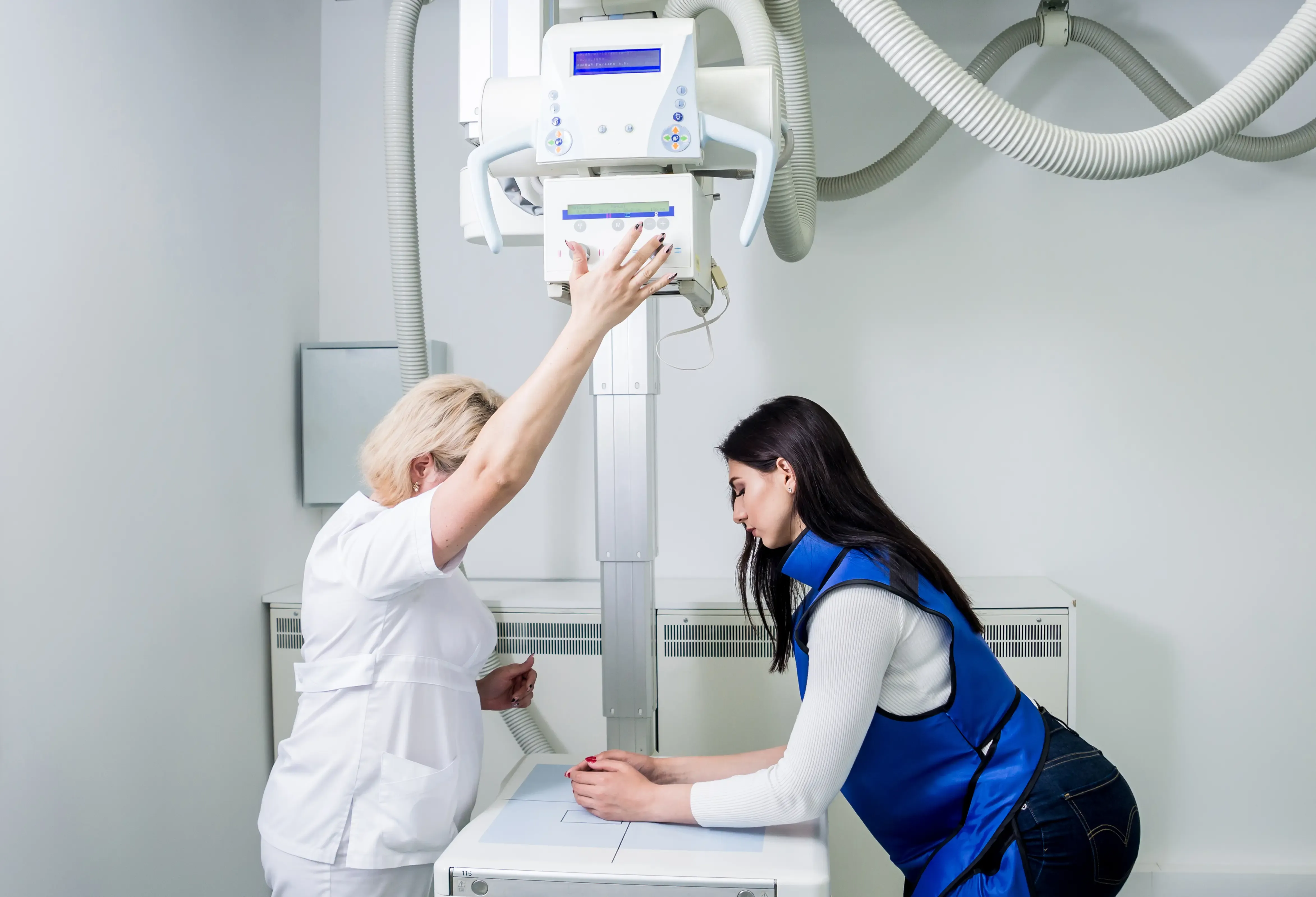
On-Site Diagnosis
When you are dealing with sudden joint pain, a suspected fracture, or a sports injury, the last thing you want is to leave your orthopedic visit, drive to a separate radiology center, wait days for a report, and then come back. That fragmented process delays your diagnosis, your treatment plan, and your return to work, training, or daily life. It also means your surgeon is reading imaging without seeing you, and you are left guessing.
At Emerald Coast Ortho, our on-site digital x-ray solves that. Dr. Leo Chen orders imaging during your visit, the technologist captures the films in minutes, and Dr. Leo Chen reviews them with you on the same screen before you leave. You get a clear explanation, a working diagnosis, and a treatment plan in one appointment. This is digital x-ray near me, done right: faster answers, lower radiation, and continuity of care, all part of our in-office services in Fort Walton Beach.
Digital Radiography Explained
X-ray imaging, also called radiography, uses a small, controlled dose of ionizing radiation to create pictures of the dense structures inside your body, most importantly bones and joints. Dense tissue like bone absorbs more of the x-ray beam and appears white on the image, while softer tissue allows more of the beam to pass through and appears darker. This contrast is what lets Dr. Leo Chen see fractures, joint alignment, arthritis changes, foreign bodies, and post-surgical hardware.
Our system at Emerald Coast Ortho is fully digital. Digital radiography (DR) uses electronic sensors instead of old film cassettes. The image appears on a high-resolution monitor within seconds of the exposure, and the technologist can adjust contrast and zoom without retaking the film. This means lower radiation dose per study, fewer repeat shots, and immediate review with your surgeon. There is no chemical processing, no waiting for prints, and no faxed report from an outside facility.
X-ray remains the first-line imaging study in orthopedics because it is fast, accessible, and excellent for bony anatomy. It is the standard starting point for evaluating acute trauma, chronic joint pain, suspected arthritis, alignment issues, and post-operative healing. When deeper soft-tissue detail is needed (ligaments, tendons, cartilage), Dr. Leo Chen may recommend MRI or ultrasound as a follow-up, but x-ray almost always comes first. For published guidance on imaging in musculoskeletal care, see the American Academy of Orthopaedic Surgeons (AAOS).
Faster, Safer, Clearer
2000+ Satisfied patients






Imaging and review happen in one visit with Dr. Leo Chen
Digital sensors require significantly less radiation than film
Skip the outside radiology center and the wait for a report
Sharper detail for fractures, alignment, and arthritis grading
Your orthopedic surgeon, not a remote radiologist, explains the findings
Diagnosis and next steps decided in a single appointment
Imaging vs Exam Alone
| Treatment | Mechanism | Time | Results | Duration | Downtime | Best For |
|---|---|---|---|---|---|---|
| X-Ray Imaging | Digital radiography of bone and joint structures | 5 to 10 minutes | Same-day diagnostic images and surgeon review | Single visit | None | Suspected fractures, joint pain, arthritis workup, post-op follow-up |
| Non-Operative Care (Assessment Alone) | History and hands-on physical examination, no imaging | 15 to 30 minutes | Clinical impression, may require imaging later | Single visit | None | Soft tissue strains, mild overuse symptoms, follow-up rechecks |
Indications and Cautions
X-ray is the appropriate first imaging step for most orthopedic complaints involving bone or joint pain, especially after trauma. It is fast, low-dose, and gives Dr. Leo Chen the bony detail he needs to make an accurate diagnosis.
If you are unsure whether you need imaging, Dr. Leo Chen will assess you clinically first and order x-ray only when it will change the diagnosis or treatment plan.
Dr. Leo Chen reviews your history and performs a focused exam to decide if x-ray is needed.
A radiology technologist positions you on the digital x-ray table and applies lead shielding where appropriate.
Two to three views are captured in 5 to 10 minutes using low-dose digital radiography.
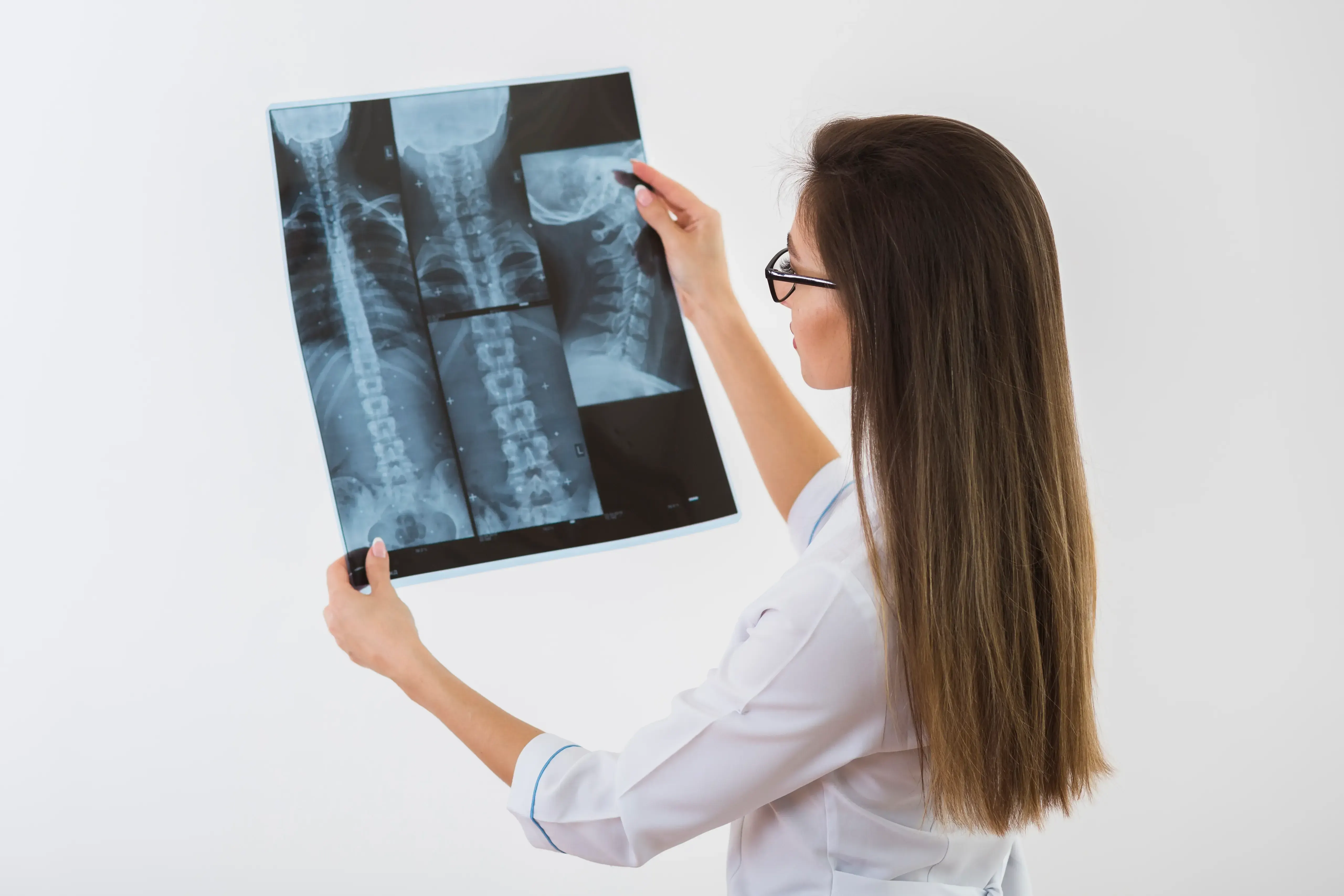
Dr. Leo Chen pulls the images up on-screen with you and explains findings in plain language.
Dr. Leo Chen builds your next steps in the same visit: cast, brace, injection, therapy, or surgical consultation.
Low-Dose Radiography
Diagnostic x-ray imaging is one of the safest imaging studies in medicine. The radiation dose for a typical orthopedic x-ray (2 to 3 views of a single body part) is extremely low. For reference, a hand or foot x-ray delivers roughly the equivalent of a few hours of natural background radiation that you receive simply by living on earth. Digital radiography reduces this dose further compared to older film systems.
Common (essentially universal): No physical side effects. You may notice mild discomfort from positioning if the injured body part is tender, but the imaging itself is painless.
Uncommon: Repeat imaging may be needed if the initial view does not clearly show the area of concern.
Rare: Cumulative radiation exposure is a theoretical concern only when patients undergo many repeated studies over short periods.
Special consideration for pregnancy: Always tell the technologist if you are pregnant or may be pregnant. We will discuss shielding, postponing the study, or substituting an alternative imaging method such as ultrasound or MRI.
X-ray imaging at Emerald Coast Ortho is typically billed through your medical insurance as a diagnostic study, often bundled with the office visit when imaging is ordered for an acute injury, chronic joint pain, or post-operative follow-up. Coverage depends on your plan's specific benefits, deductible, and copay structure.
What affects your out-of-pocket cost:
Self-pay patients: We offer transparent self-pay pricing for x-ray imaging when insurance is not in play. Pricing is usually a fraction of what hospital-based imaging centers charge for the same study, because we keep the workflow in-house and avoid facility fees.
To get a specific quote for your situation:
We believe in pricing transparency. You will know what to expect before the imaging is performed, not after.
Fort Walton Beach, FL
No referrals, no waiting, imaging captured during your visit
Dr. Leo Chen reads and explains your images personally, same day
Imaging supports the least invasive treatment path possible
Twenty-four years serving Okaloosa, Walton, Santa Rosa, and Escambia counties
X-rays are used at first evaluation, pre-surgery planning, post-op implant checks, and fracture healing follow-ups - all captured and reviewed in the same Fort Walton Beach office.
In-office digital X-ray is covered under Medicare, Tricare, and most commercial plans as part of your orthopedic visit - no separate imaging facility bill in most cases.
What Patients Ask Most
Yes. Emerald Coast Ortho has fully digital x-ray imaging in-office. There is no need to drive to a separate radiology center. Dr. Leo Chen reviews your images with you the same day.
No. We prefer that you come in first so Dr. Leo Chen can examine you, decide which views are actually needed, and capture them on-site. This avoids unnecessary or duplicate imaging.
Yes. Digital orthopedic x-rays use a very low dose of radiation, comparable to a few hours of natural background exposure. We use lead shielding and order imaging only when it will guide diagnosis or treatment.
A typical 2 to 3 view orthopedic x-ray series takes about 5 to 10 minutes from positioning to final image. You can resume normal activity immediately afterward.
Yes. Imaging and surgeon review happen in the same visit. Dr. Leo Chen pulls the images up on-screen with you, explains the findings, and discusses next steps in one appointment.
Tell the technologist before any imaging. We will discuss shielding, postponing the study, or substituting ultrasound or MRI as a safer alternative depending on the body part and clinical urgency.