Pre-Op Prep
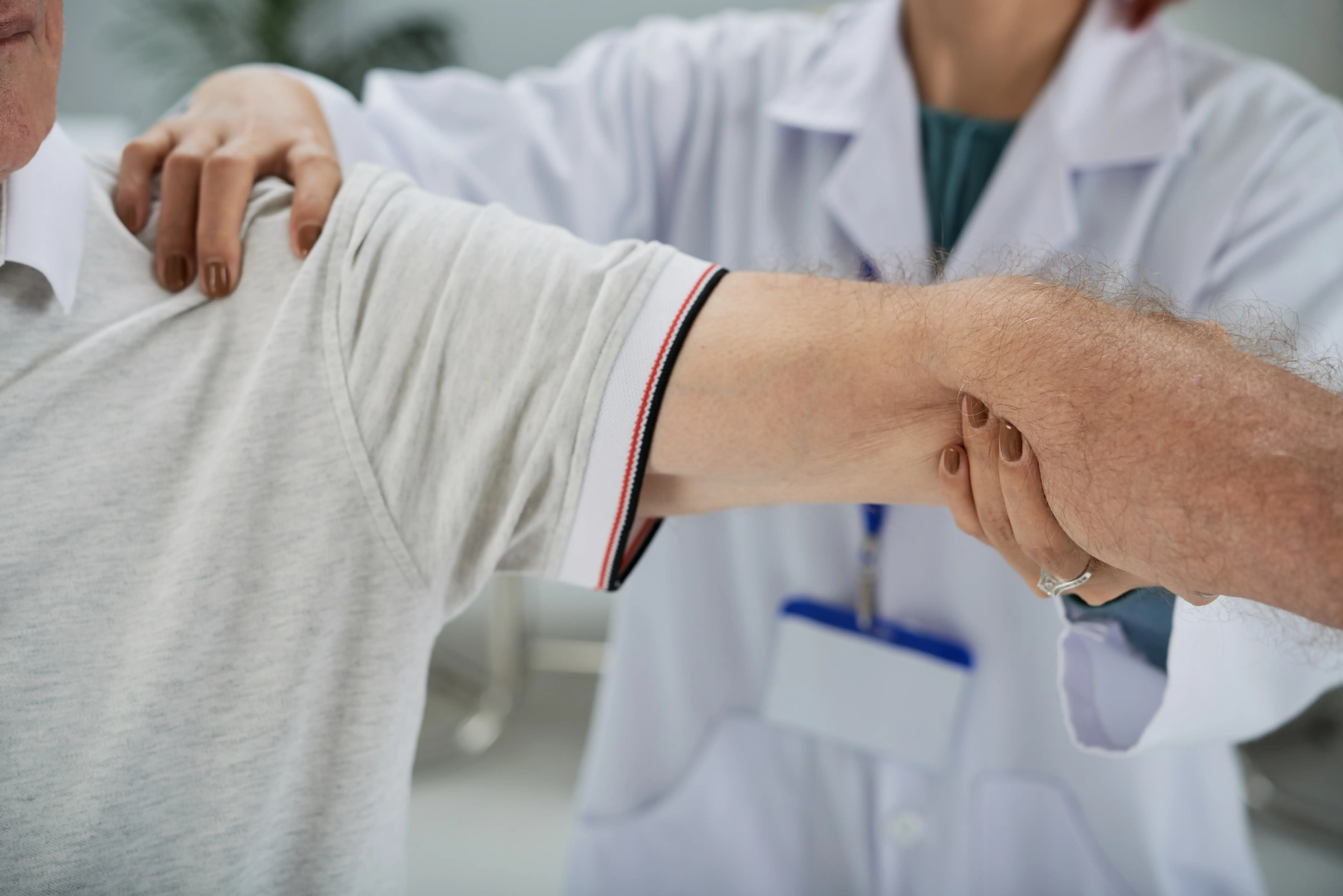
Dr. Leo Chen confirms the surgical plan, marks the operative shoulder and reviews imaging with you.

Arthroscopic Tendon Repair

Restore strength and range
A torn rotator cuff makes everyday motion painful: reaching overhead, lifting groceries, sleeping on the affected side, even getting dressed. Pain often radiates down the upper arm and weakness builds over weeks or months. Full-thickness tears do not heal on their own and tend to enlarge over time, allowing the tendon to retract and the muscle to atrophy. Patients who delay evaluation may discover that the tear has progressed beyond what straightforward repair can address.
Arthroscopic rotator cuff repair at Emerald Coast Ortho reattaches torn supraspinatus, infraspinatus, subscapularis or teres minor tendons to the humeral head using small suture anchors placed through tiny incisions. Dr. Leo Chen uses single-row or double-row techniques depending on tear size, tendon quality and your activity goals. Most patients regain reliable overhead strength and sleep through the night again within 4 to 6 months of dedicated post-op rehabilitation.
Arthroscopic Tendon Reattachment
Rotator cuff repair is a surgical procedure that reattaches one or more torn rotator cuff tendons (supraspinatus, infraspinatus, subscapularis, teres minor) back to their footprint on the humeral head. The rotator cuff is a group of four muscles and tendons that stabilize the shoulder joint and allow you to lift and rotate your arm.
Tears are classified by depth and size. A partial-thickness tear involves only a portion of the tendon fibers and may sometimes respond to physical therapy, PRP injections or corticosteroid injections. A full-thickness tear is a complete rupture through the entire tendon and generally does not heal without surgery, particularly in active patients or larger tears.
Dr. Leo Chen performs the repair arthroscopically through three or four small incisions, each less than a centimeter long. A camera (arthroscope) projects a high-definition view inside your shoulder onto a monitor, and specialized instruments are used to debride frayed tissue, mobilize the retracted tendon, and secure it to bone using titanium or biocomposite suture anchors. Two main fixation strategies are used: single-row repair places one row of anchors at the medial edge of the tendon footprint and is typically chosen for small to medium tears or when tendon quality is poor; double-row repair uses both a medial and a lateral row of anchors to recreate the natural tendon-bone interface across the entire footprint and is generally preferred for medium to large tears in healthier tissue because it provides stronger initial fixation and a larger contact area for healing.
The decision between single-row and double-row, and ultimately whether surgery is the right path at all, depends on tear size, tear pattern, tendon retraction, muscle quality on MRI, your age, activity demands and how you have responded to non-operative treatment. Dr. Leo Chen reviews all of this with you at consultation.
Why patients choose surgery
2000+ Satisfied patients






Reliable overhead lifting and rotational strength after rehab.
Significant reduction in night pain and motion-related pain.
Small incisions, less soft-tissue trauma, lower infection risk.
Home the same day, recover in your own bed.
Stops the tear from enlarging and the muscle from atrophying.
Published outcomes report 85 to 95 percent satisfaction for primary repairs.
Compare options
| Treatment | Mechanism | Time | Results | Duration | Downtime | Best For |
|---|---|---|---|---|---|---|
| Rotator Cuff Repair | Arthroscopic suture anchor reattachment of torn tendon to bone | 1 to 2 hours | Restored strength and pain relief | Permanent if tendon heals | Sling 4 to 6 weeks, PT 4 to 6 months | Full-thickness tears, failed conservative care, active patients |
| Shoulder Replacement | Resurfacing or replacing arthritic humeral head and glenoid with prosthesis | 1.5 to 2.5 hours | Pain relief and improved motion | 15 to 20 plus years | Sling 4 to 6 weeks, PT 3 to 4 months | Advanced glenohumeral arthritis, irreparable cuff tear arthropathy |
| PRP Injections | Concentrated platelet growth factors injected into tendon | 30 minutes | Reduced inflammation and tendon healing support | 6 to 12 months | None to minimal | Partial-thickness tears, tendinopathy, post-op healing adjunct |
| Corticosteroid Injections | Anti-inflammatory steroid into subacromial space | 10 to 15 minutes | Short-term pain and inflammation relief | 6 weeks to 3 months | None | Diagnostic confirmation, bridge to PT, non-surgical candidates |
Surgical candidacy criteria
Not every rotator cuff tear needs surgery. Many small partial-thickness tears improve with structured physical therapy, activity modification, PRP injections or corticosteroid injections. Surgery is generally considered when a tear is full-thickness, when symptoms persist after 3 to 6 months of dedicated non-operative care, or when an acute traumatic tear occurs in an active patient.
Dr. Leo Chen reviews your MRI, exam findings and prior treatment history at consultation to confirm whether surgical repair, continued non-operative care or an alternative procedure is the safest and most effective path.
Dr. Leo Chen confirms the surgical plan, marks the operative shoulder and reviews imaging with you.
Anesthesia team places an interscalene nerve block plus general anesthesia for comfort.
Dr. Leo Chen inserts the arthroscope through small portals and inspects the entire joint and bursa.
Dr. Leo Chen mobilizes the torn tendon and secures it to bone with single-row or double-row suture anchors.
Portals are closed with absorbable sutures, sterile dressing and abduction sling are applied.
What you should know
Like any surgery, arthroscopic rotator cuff repair carries risks. Most patients experience expected post-operative effects that resolve with time and rehabilitation. Common, short-term effects include surgical site soreness for 1 to 2 weeks, bruising and mild swelling around the shoulder and upper arm, temporary numbness in the arm from the interscalene nerve block (typically wears off in 12 to 24 hours), shoulder stiffness during the early sling phase, and difficulty sleeping in non-upright positions for the first 2 to 4 weeks.
Uncommon risks include persistent stiffness or adhesive capsulitis (frozen shoulder), which is treated with aggressive physical therapy and occasionally manipulation under anesthesia; superficial wound infection at a portal site, treated with oral antibiotics; and re-tear of the repaired tendon. Rare but serious risks include deep infection requiring return to the operating room, deep vein thrombosis or pulmonary embolism, persistent nerve injury.
Call (850) 864-3339 immediately for fever above 101.5, expanding redness, drainage from incisions, calf pain or swelling, or sudden shortness of breath.
Arthroscopic rotator cuff repair is typically covered by commercial insurance, Medicare and Medicaid when documented as medically necessary. Coverage usually requires evidence of a confirmed full-thickness or significant partial-thickness tear on MRI, plus a documented trial of conservative treatment such as physical therapy and/or injections.
Your total out-of-pocket cost depends on several factors:
Emerald Coast Ortho is happy to verify your benefits before surgery. We dispense slings, braces and other DME in-office so you leave fully equipped. For self-pay or out-of-network patients, we offer transparent bundled estimates. Call (850) 864-3339 to request a personalized cost estimate, or bring your insurance card to your consultation and we will run the verification for you.
At consultation, Dr. Leo Chen will also discuss whether non-operative options (PRP, corticosteroid injection, structured PT) might be appropriate first, since these are usually lower-cost paths when clinically reasonable.
Fort Walton Beach surgical care
Diplomate of the American Board of Orthopaedic Surgery, fellowship trained.
We exhaust PT, injections and bracing before recommending surgery.
Same-day digital X-ray and in-office DME (slings, braces) at one location.
Dr. Leo Chen handles your consult, surgery and every post-op visit personally.
Rotator cuff repairs are performed arthroscopically through small incisions, minimizing soft tissue disruption and supporting a faster, less painful recovery than open surgery.
Rotator cuff repair is covered under Tricare, Medicare, and most commercial plans. We serve Fort Walton Beach's active duty and veteran population with accepted military insurance and transparent billing.
Your questions answered
Sling for 4 to 6 weeks, passive range of motion starts immediately, active motion at 6 to 8 weeks, light strengthening at 12 weeks, and full return to overhead lifting or sport at 4 to 6 months.
No. Many partial-thickness tears improve with physical therapy, PRP or corticosteroid injections. Surgery is generally reserved for full-thickness tears or symptoms that persist after 3 to 6 months of conservative care.
Partial-thickness tears can sometimes improve with non-operative care, though the torn fibers themselves do not regrow. Full-thickness tears do not heal on their own and tend to enlarge over time, which is why surgery is often recommended.
Published outcomes report 85 to 95 percent patient satisfaction and significant pain relief after arthroscopic repair. Re-tear rates range from 10 to 20 percent and depend on tear size, age, tissue quality and smoking status.
Single-row uses one row of suture anchors and is chosen for smaller tears or poor tissue. Double-row uses both medial and lateral anchors to recreate the full tendon footprint, providing stronger fixation for medium to large tears.
Most patients can drive 4 to 6 weeks after surgery, once they are out of the sling, off narcotic pain medication and have regained enough shoulder motion to safely control the steering wheel.