Consultation
Dr. Leo Chen reviews your symptoms, exam findings, and imaging to confirm facet pain suspicion.


Targeted Spine Pain Relief
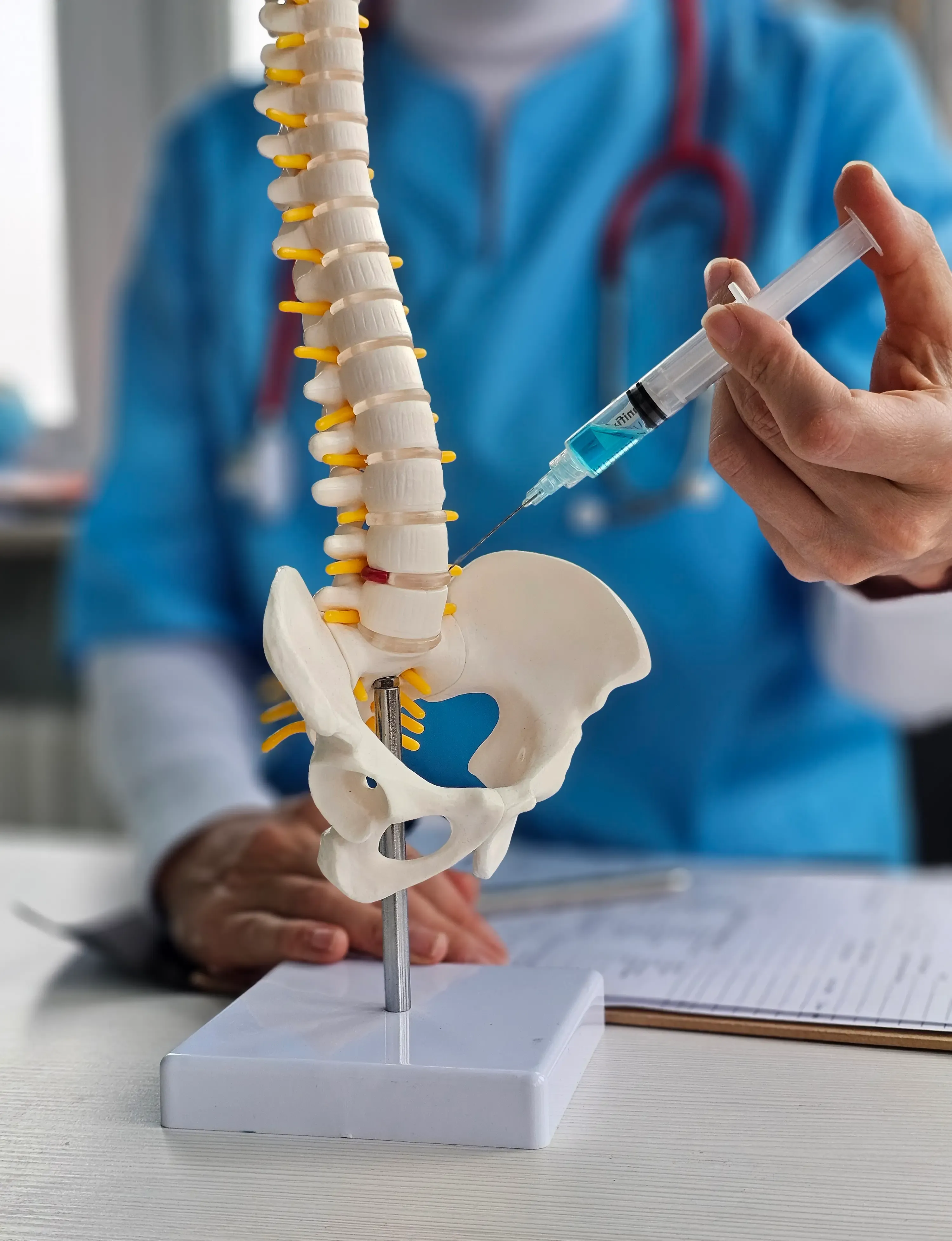
The problem and the solution
Low back pain that worsens with twisting, bending backward, or standing for long periods often comes from the facet joints, the small paired joints at the back of each spinal segment. The pain is usually deep, achy, and sometimes radiates into the buttock or upper thigh. MRI scans frequently show degenerative changes at multiple levels, which makes it difficult to confirm which joints are actually generating pain. Many patients cycle through medications, physical therapy, and chiropractic care without lasting relief because the true pain source has never been confirmed.
A facet joint injection serves two purposes in one procedure. Under live fluoroscopy, Dr. Leo Chen places a small volume of local anesthetic and corticosteroid into or around the suspected facet joint. If your pain improves significantly within minutes, the joint is confirmed as the pain generator, which is the diagnostic step. The steroid then works over the following days to calm inflammation, which is the therapeutic step. The result is targeted relief plus a clear answer that guides every next step in your care plan.
Image-guided spinal injection
A facet joint injection is a minimally invasive, image-guided spinal procedure used to both diagnose and treat pain originating from one or more facet joints. Facet joints are the small synovial joints located at the back of each vertebra that allow controlled motion of the spine. Arthritis, degenerative changes, prior injury, or repetitive loading can inflame these joints and produce a characteristic pattern of axial low back pain. Because imaging alone cannot reliably tell us which joints hurt, a properly performed facet injection is one of the most useful tools we have to confirm the diagnosis.
There are two related techniques Dr. Leo Chen may use, and the choice depends on what we are trying to learn. An intra-articular facet injection places a mixture of local anesthetic and corticosteroid directly inside the joint capsule. This delivers anti-inflammatory medication into the painful joint and provides both diagnostic information and longer therapeutic benefit. A medial branch block targets the tiny medial branch nerves that carry pain signals away from the facet joint. Because the medial branches are the only pain pathway for these joints, a positive response to a medial branch block is a strong signal that the joint is the true source. Medial branch blocks are also the standard screening step before considering radiofrequency ablation, a longer-term denervation option.
Both procedures use fluoroscopy, a form of live, low-dose X-ray that allows precise needle placement within millimeters of the target. Contrast dye is typically injected first to confirm the needle is in the correct position before any medication is delivered. This guidance is what separates a reliable, targeted injection from a less accurate blind injection and is the standard of care recommended by orthopedic and pain medicine societies.
Most patients describe the procedure itself as quick and well tolerated. You lie face down on a padded fluoroscopy table, the skin over the lower back is cleaned and numbed with local anesthetic, and Dr. Leo Chen guides the spinal needle to the target joint or medial branch nerve under live imaging. Once placement is confirmed, the medication is delivered, the needle is removed, and a small bandage is applied. The entire visit usually takes about an hour, with the actual injection portion lasting only 15 to 30 minutes.
Targeted, image-guided relief
2000+ Satisfied patients






Confirms whether a facet joint is the true source of your low back pain.
Corticosteroid calms inflammation and can ease pain for weeks to months.
Needle-based procedure, no incision, no general anesthesia required.
Live fluoroscopy places the medication within millimeters of the target.
Most patients walk out within an hour and resume light activity the next day.
Results guide therapy, ablation, or other care decisions with real data.
Compare your options
| Treatment | Mechanism | Time | Results | Duration | Downtime | Best For |
|---|---|---|---|---|---|---|
| Facet Joint Injection | Anesthetic + steroid into or near the facet joint | 15 to 30 minutes | Pain relief within minutes (diagnostic), days (therapeutic) | Weeks to several months | 1 to 2 days light activity | Confirmed or suspected facet-mediated back pain |
| Epidural Steroid Injections | Steroid into the epidural space around irritated nerve roots | 15 to 30 minutes | Relief over days to 2 weeks | Weeks to a few months | 1 to 2 days light activity | Radicular pain from a disc herniation or nerve root inflammation |
| Non-Operative Care | Physical therapy, activity modification, oral medications, bracing | Several weeks of care | Gradual functional gains | Maintained while active | None | First-line care for most back pain before injections are considered |

Right diagnosis, right timing
Facet joint injections are most useful when the clinical exam, history, and imaging all point toward a facet-mediated source of pain that has not responded to a reasonable trial of conservative care.
Dr. Leo Chen will review your imaging, exam, and full health history before recommending an injection so the plan matches the actual source of your pain.
Dr. Leo Chen reviews your symptoms, exam findings, and imaging to confirm facet pain suspicion.
You lie face down on the fluoroscopy table while the skin is cleaned and numbed.
Dr. Leo Chen uses live fluoroscopy and contrast dye to confirm exact needle position.
A small volume of local anesthetic and corticosteroid is delivered into or near the facet joint.
You are observed briefly, then sent home with a simple pain diary to track diagnostic response.
What to know
Facet joint injections performed under fluoroscopy by an experienced orthopedic surgeon have a strong safety profile, but no spinal procedure is risk-free. Dr. Leo Chen will review your specific risk factors during consultation.
Common, short-lived side effects include soreness at the injection site, a temporary increase in back pain for the first 24 to 48 hours as the anesthetic wears off, mild bruising, and short-term facial flushing from the corticosteroid. Patients with diabetes may notice a temporary rise in blood sugar for a few days. These effects typically resolve on their own.
Uncommon side effects include headache, dizziness, transient leg weakness or numbness from spread of the local anesthetic, low-grade fever, and a brief flare of pain. Most resolve with rest, hydration, and over-the-counter pain relief.
Rare but serious complications can include infection, bleeding, allergic reaction to medications or contrast dye. Image guidance, sterile technique, careful patient selection, and proper post-procedure instructions significantly reduce these risks.
Call Emerald Coast Orthoat (850) 864-3339 right away for fever, worsening weakness, loss of bowel or bladder control, or signs of infection at the injection site.
Facet joint injections are a recognized medical procedure and are typically billed through health insurance, including most commercial plans, Medicare, and Medicare Advantage. Your out-of-pocket cost depends on your specific plan, deductible, copay or coinsurance, and whether prior authorization is required before the injection is scheduled.
What affects your final cost:
What we do for you: Our team verifies your benefits before your visit so you have a clear picture of expected costs. We submit prior authorization requests when required, document medical necessity carefully, and provide itemized statements after the visit. For uninsured or self-pay patients, we are happy to discuss transparent self-pay pricing during consultation.
For the most accurate quote based on your insurance and the specific injection plan Dr. Leo Chen recommends, please call us at (850) 864-3339. Our patient services team will walk you through coverage, prior authorization, and any anticipated out-of-pocket costs before your procedure is booked.
Fort Walton Beach, FL
Diplomate of the American Board of Orthopaedic Surgery.
Every injection performed under live, low-dose imaging for precision.
Injections used as part of a step-care plan, not a one-size-fits-all fix.
Same-day digital X-ray and in-office bracing if your plan requires support.
Each injection confirms the exact pain-generating joint, giving you a clear diagnosis that guides every next step in your spine care.
Dr. Leo Chen combines orthopedic surgery and sports medicine training to manage both acute and chronic facet-mediated back pain in Fort Walton Beach.
About facet joint injections
Facet joints are the small paired joints at the back of each vertebra that allow controlled spinal motion. When arthritic or inflamed, they can cause deep, achy low back or neck pain that worsens with extension or rotation.
Under live fluoroscopy, Dr. Leo Chen places local anesthetic plus corticosteroid into or near the facet joint. The anesthetic provides immediate diagnostic feedback, while the steroid reduces inflammation over the following days for longer relief.
Relief from the local anesthetic begins within minutes. Steroid-driven relief typically peaks in 3 to 7 days and can last several weeks to a few months. Duration varies based on arthritis severity, activity level, and your overall spine health.
Both. The immediate response to the anesthetic confirms whether the targeted joint is the pain source (diagnostic). The corticosteroid then provides longer-term anti-inflammatory relief (therapeutic) and can guide next steps such as therapy or ablation.
A medial branch block numbs the small nerves that carry pain signals from the facet joint and is often used as a screening step before radiofrequency ablation. An intra-articular injection places medication directly inside the joint capsule.
Most patients return to desk work the next day and to more demanding activities within 2 to 3 days. Avoid heavy lifting and strenuous exercise for the first 24 to 48 hours to allow soreness to settle.