Consultation and MRI
Dr. Leo Chen reviews your history, exam findings and MRI to confirm tear location and decide on a repair plan.


Preserve the natural cushion
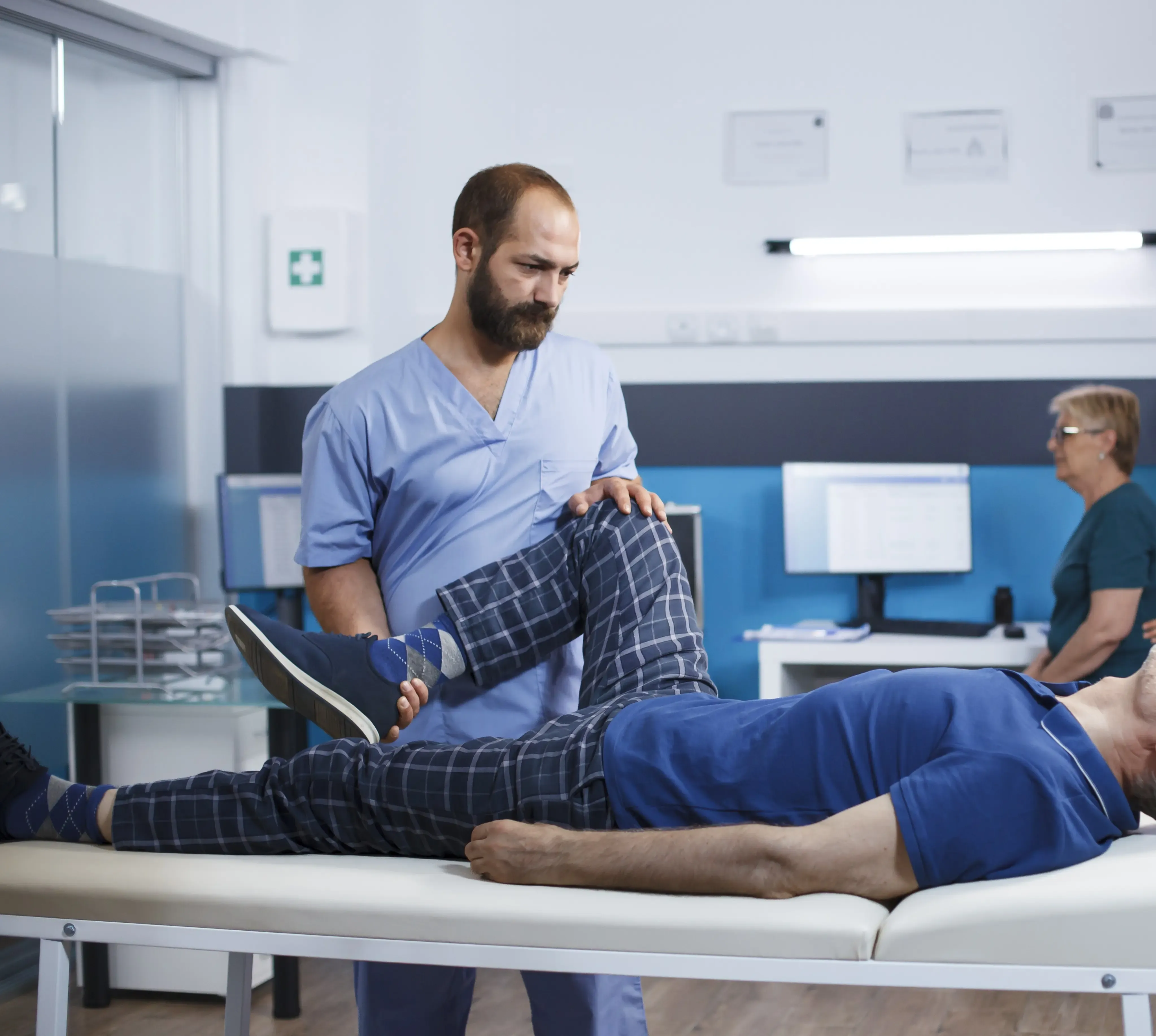
Repair instead of remove
A torn meniscus often shows up as a sharp catch when you twist, a locking sensation, swelling that comes back after activity, or pain along the joint line that will not settle with rest. Many patients first try ice, anti-inflammatories and activity changes, but a tear in the wrong location or pattern keeps re-tearing the surrounding cartilage. Left untreated, an unstable tear can damage the joint surface and accelerate arthritis, which is why timing of evaluation matters for an active knee.
Arthroscopic meniscus repair stitches the torn edges back together so the tissue can heal in its original position. Because the meniscus acts as a shock absorber for the knee, preserving it (rather than trimming it out) protects the underlying cartilage for the long term. Dr. Leo Chen uses small-incision arthroscopy, fluid distention and modern all-inside or inside-out suture devices to repair tears whenever the location, pattern and blood supply make healing realistic.
Arthroscopic suture reconstruction
Meniscus repair is an arthroscopic knee procedure that uses sutures or small anchor devices to bring the torn edges of the meniscus back together, allowing the tissue to heal in place. The meniscus is a C-shaped piece of fibrocartilage that sits between the thigh bone (femur) and shin bone (tibia), one on each side of the knee. It distributes load, absorbs shock and stabilizes the joint during walking, running, squatting and pivoting.
Not every meniscus tear can be repaired. Healing depends primarily on blood supply, and the meniscus is divided into three zones for this reason. The outer third (red-red zone) has direct vascular supply and heals predictably. The middle third (red-white zone) has partial blood supply and can often heal with proper technique. The inner third (white-white zone) has almost no blood supply and will not reliably heal, so tears in that zone are usually managed with partial meniscectomy in Fort Walton Beach instead. Tear pattern also matters: vertical longitudinal tears, bucket-handle tears and certain root tears are good candidates for repair, while complex, degenerative or radial tears in poor blood-supply zones are not.
During surgery, Dr. Leo Chen makes two or three small incisions called portals (each roughly a quarter inch wide), inserts a high-definition arthroscopic camera and fills the joint with sterile fluid to expand it. He identifies the tear, prepares the torn edges by gently abrading the surface to stimulate a healing response and then re-approximates the tissue using one of three suture techniques: all-inside (devices placed entirely through the arthroscopic portal), inside-out (sutures passed through the joint and tied outside through a small accessory incision) or outside-in (typically used for tears near the front of the meniscus). The number of sutures depends on tear length, usually two to four.
Repair is almost always done as an outpatient procedure with general or regional anesthesia. Most patients go home the same day, walk with crutches and a hinged brace for the first several weeks, and progress through a structured rehabilitation plan with their physical therapist. Because the goal is biological healing, the early recovery is more protected than a meniscectomy, but the long-term outcome is better: the natural shock absorber stays in place.
Long-term joint protection
2000+ Satisfied patients






Keeps your natural shock absorber, reducing long-term cartilage wear.
Repair is linked to lower rates of knee osteoarthritis than removal.
An intact meniscus contributes to rotational and load stability.
Small portal incisions, same-day discharge, no large open wound.
Most patients return to full sport between 4 and 6 months.
Can be combined with ACL reconstruction or cartilage procedures in one surgery.
Knee tear options
| Treatment | Mechanism | Time | Results | Duration | Downtime | Best For |
|---|---|---|---|---|---|---|
| Meniscus Repair | Sutures torn meniscus so it heals in place | 45 to 90 min | Restores natural cushion | Long-term, lifelong if healed | 4 to 6 weeks protected weight bearing | Repairable tears in red-red or red-white zone |
| Meniscectomy | Trims torn segment, removes unstable tissue | 20 to 45 min | Fast symptom relief | Permanent (tissue gone) | 1 to 2 weeks light activity | Inner-zone or degenerative tears that cannot heal |
| PRP Injections | Concentrated platelets stimulate healing | 30 to 45 min | Reduces pain and inflammation | Several months to a year | 1 to 3 days | Small tears, early degeneration, surgical adjunct |
| Non-Operative Care | Rest, PT, bracing, anti-inflammatories | Ongoing | Variable, depends on tear | Symptom management | None | Stable tears or patients deferring surgery |
Tear biology decides
Meniscus repair is preferred over removal whenever the tear can realistically heal. Candidacy depends on three things: tear location (zone), tear pattern and patient biology.
Final candidacy is confirmed only after Dr. Leo Chen reviews your MRI and examines the knee, and sometimes the final repair-versus-remove decision is made arthroscopically once the tear is directly visualized.
Dr. Leo Chen reviews your history, exam findings and MRI to confirm tear location and decide on a repair plan.
On the day of surgery, Dr. Leo Chen reviews the plan, marks the operative knee and the anesthesia team places a nerve block.
Dr. Leo Chen places two to three small portals, inserts the arthroscope and inspects every compartment of the joint.
Dr. Leo Chen prepares the tear edges and places all-inside or inside-out sutures to bring the torn meniscus back together.
Dr. Leo Chen sees you at 2 weeks, 6 weeks and 3 months to monitor healing, brace progression and return-to-sport readiness.
What to know
Arthroscopic meniscus repair has a strong safety profile, but like any surgery it carries some risks that Dr. Leo Chen will review with you in detail.
Common and expected effects: swelling around the knee, mild bruising at the portal sites, soreness during the first 1 to 2 weeks, temporary stiffness, and aching with weather changes during the early months. These typically resolve with ice, elevation, prescribed medications and gradual physical therapy.
Less common risks: persistent swelling beyond the expected window, calf or thigh soreness from immobilization, mild numbness near a portal site that usually fades, and slow range-of-motion recovery requiring extra PT sessions.
Rare but serious risks: infection in the joint (less than 1 percent), deep vein thrombosis (blood clot) in the leg, nerve injury near the inside-out suture site.
Call Emerald Coast Ortho at (850) 864-3339 right away, or go to the nearest emergency department, if you develop a fever, spreading redness, warmth or drainage at the incision, calf pain or swelling, chest pain, or shortness of breath after surgery.
Meniscus repair is typically a medically necessary, insurance-billed procedure rather than a flat cash-pay service. Total cost depends on several factors including your insurance plan, deductible, copay, the surgery center or hospital facility fee, anesthesia, and any additional procedures (such as combined ACL reconstruction or cartilage work) performed during the same operation.
What insurance generally covers: the surgeon's professional fee, facility fee, anesthesia, intra-operative imaging and the standard course of post-operative follow-up visits. Most major commercial plans, Medicare and many Medicare Advantage plans cover arthroscopic meniscus repair when documented as medically necessary based on MRI findings and a failed trial of conservative care.
What you should expect to discuss at your consultation:
Because pricing varies meaningfully by plan and by what is found during surgery, we publish ranges instead of a fixed price. Call Emerald Coast Ortho at (850) 864-3339 for a personalized estimate, insurance verification and a clear breakdown of what your surgery will look like financially before you book.
Fort Walton Beach, FL
Fellowship-trained surgeon focused on preserving the meniscus first.
Same-day X-ray and direct MRI review at Emerald Coast Ortho.
Dr. Leo Chen performs your surgery and every follow-up visit personally.
On-site DME, Emvital laser therapy and structured PT coordination.
Not every torn meniscus needs to be cut out. Dr. Leo Chen evaluates tear pattern, location, and blood supply to recommend repair whenever the tissue can heal - protecting your knee for decades.
Meniscus repair is covered under Tricare, Medicare, and most commercial plans. We serve Fort Walton Beach's active duty and veteran community with accepted military insurance.
Answers from Dr. Leo Chen
No. Repair only works when the tear is in the red-red or red-white zone with blood supply, and when the tear pattern (vertical, bucket-handle, root) supports healing. White-white zone, complex or degenerative tears are usually treated with partial meniscectomy instead.
Most patients use crutches and a hinged brace for 4 to 6 weeks, walk normally by 2 to 3 months, jog in a straight line around month 3, and return to cutting and pivoting sport between 4 and 6 months once the repair has healed.
Repair sutures the torn meniscus so it heals in place and preserves the natural cushion. Meniscectomy trims out the torn segment instead. Repair is preferred when biology allows because it protects the joint long-term and lowers arthritis risk.
Yes. Physical therapy starts within the first week and continues for 3 to 6 months. The early phase protects the repair with range-of-motion and quad activation, then progresses to strengthening, balance work and finally sport-specific drills.
Yes. Meniscus repair is performed arthroscopically through small portal incisions, takes 45 to 90 minutes, and almost all patients go home the same day with a hinged knee brace and crutches.
Re-tear or failure to heal occurs in roughly 10 to 30 percent of cases. If symptoms return, a second arthroscopy is typically performed to convert the repair to a partial meniscectomy, which provides reliable symptom relief.